
Best 2-Person Inflatable Kayaks of 2026
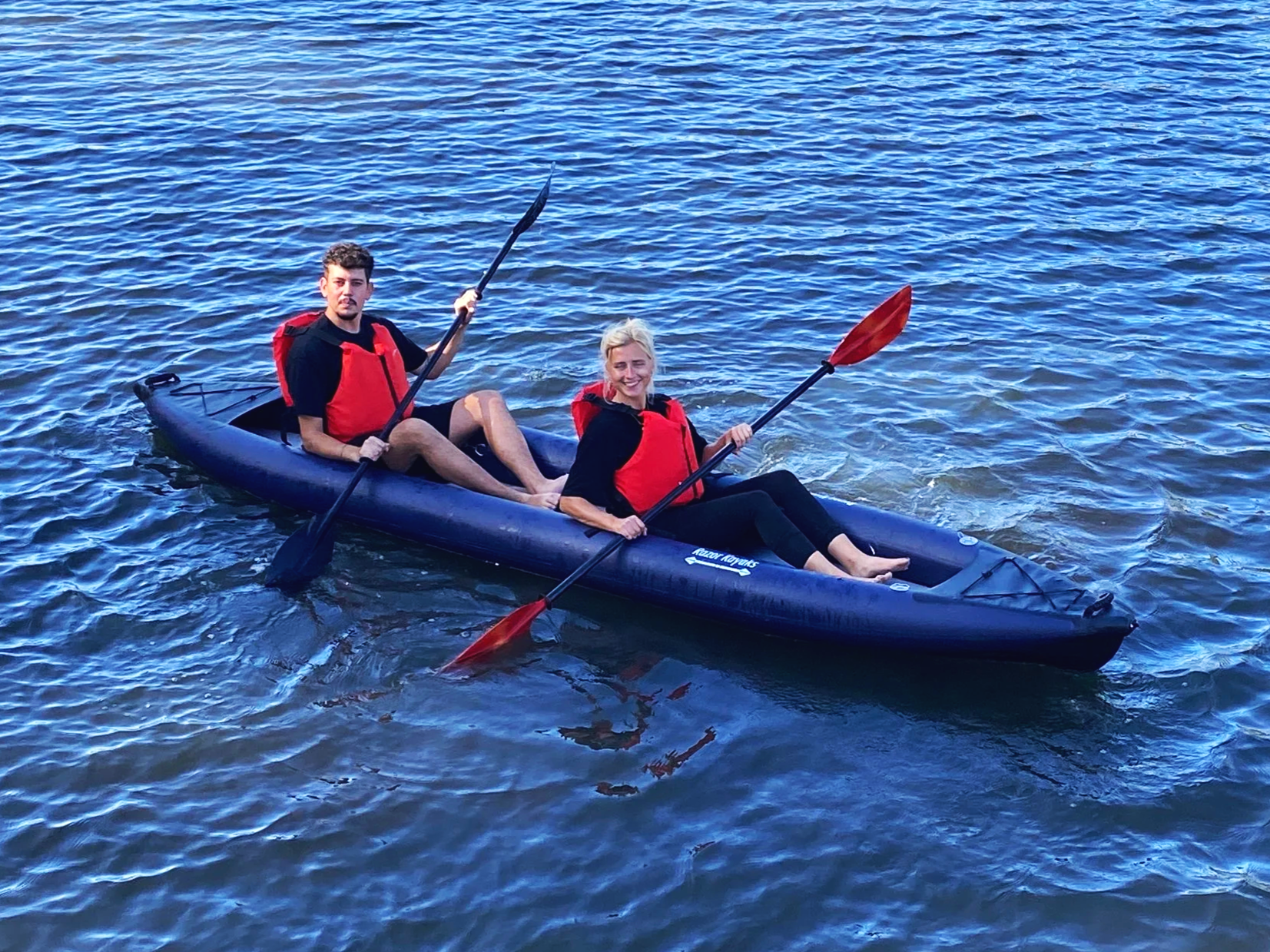
We tested the top 2-person inflatable kayaks side-by-side in real-world conditions, including wide rivers, inland lakes and coastal bays, covering touring routes and recreational paddling. Our goal was to find out which models genuinely perform on the water.
This in-depth guide compares the best options available, whether you want a high-performance touring inflatable, a stable beginners' kayak, or the best value for couples and families. Access full reviews of each product via the 'Read Full Review' buttons below, or if you're looking for 1-person inflatable kayaks, visit our best inflatable kayak reviews.
Independently tested | Updated for 2026 | Real-world comparison testing
Updated June 17th: Layout changes
Compare The Best 2-Person Inflatable Kayaks
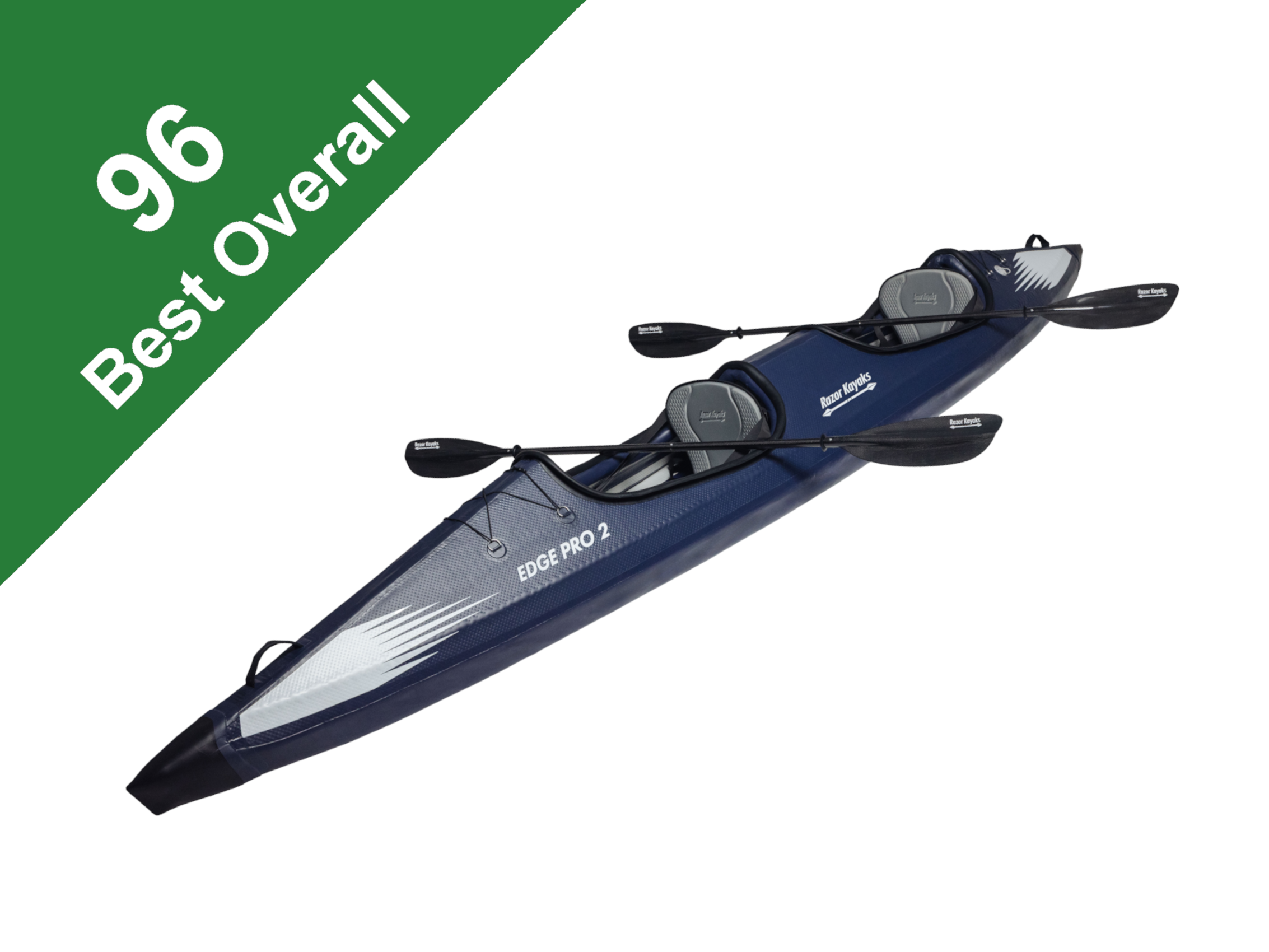
Razor Kayaks Edge Pro 2
Price At Time Of Writing | $1,499.00
Overall Rating | 96
Performance | 10
Construction | 10
Setup/Pack Down | 9
Portability | 7
Comfort | 10
Open Size - 16’ 1” x 29”
Weight - 44 lbs
Load Capacity - 595 lbs
Packed Size - 32” x 21” x 17”
Best For - Paddlers looking for a high-performance, rigid-feeling inflatable
Pros - Durable, comfortable seating, excellent tracking
Cons - Expensive
Overall - A quality inflatable that is incredibly easy to paddle and handle
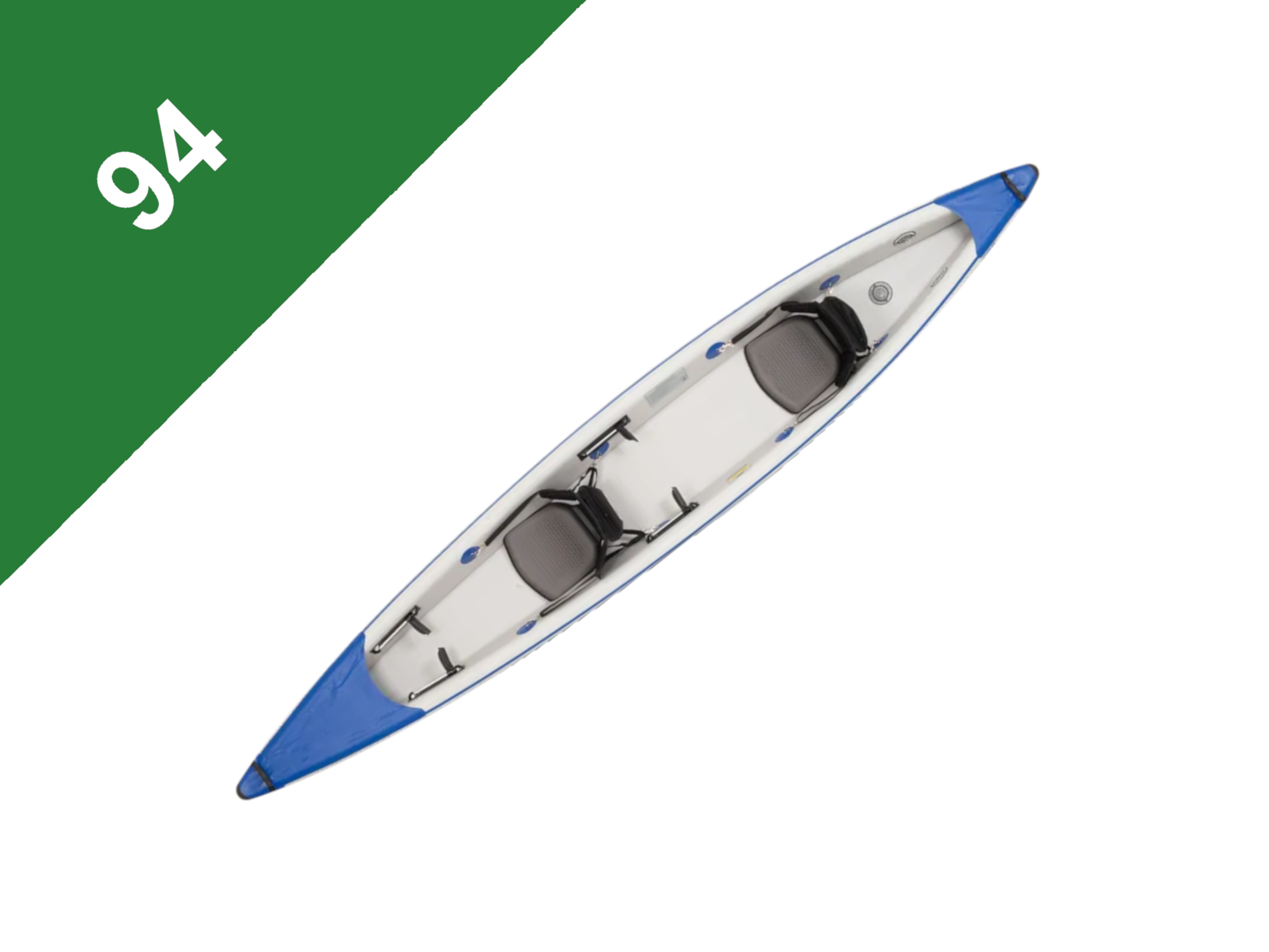
Sea Eagle 473rl RazorLite
Price At Time Of Writing | $1,499.00
Overall Rating | 94
Performance | 9
Construction | 9
Setup/Pack Down | 9
Portability | 8
Comfort | 9
Open Size - 15’6”x2’5”
Weight - 45 lbs
Load Capacity - 750 lbs
Packed Size - 38x24x12in
Best For - Experienced paddlers seeking a fast, rigid, high-performance inflatable
Pros - Exceptional speed, hard-shell feel, durable drop-stitch build, roomy cockpit
Cons - Less stable for beginners, tight footrest setup, bulky to carry
Overall - A premium inflatable built for performance, precision and serious touring
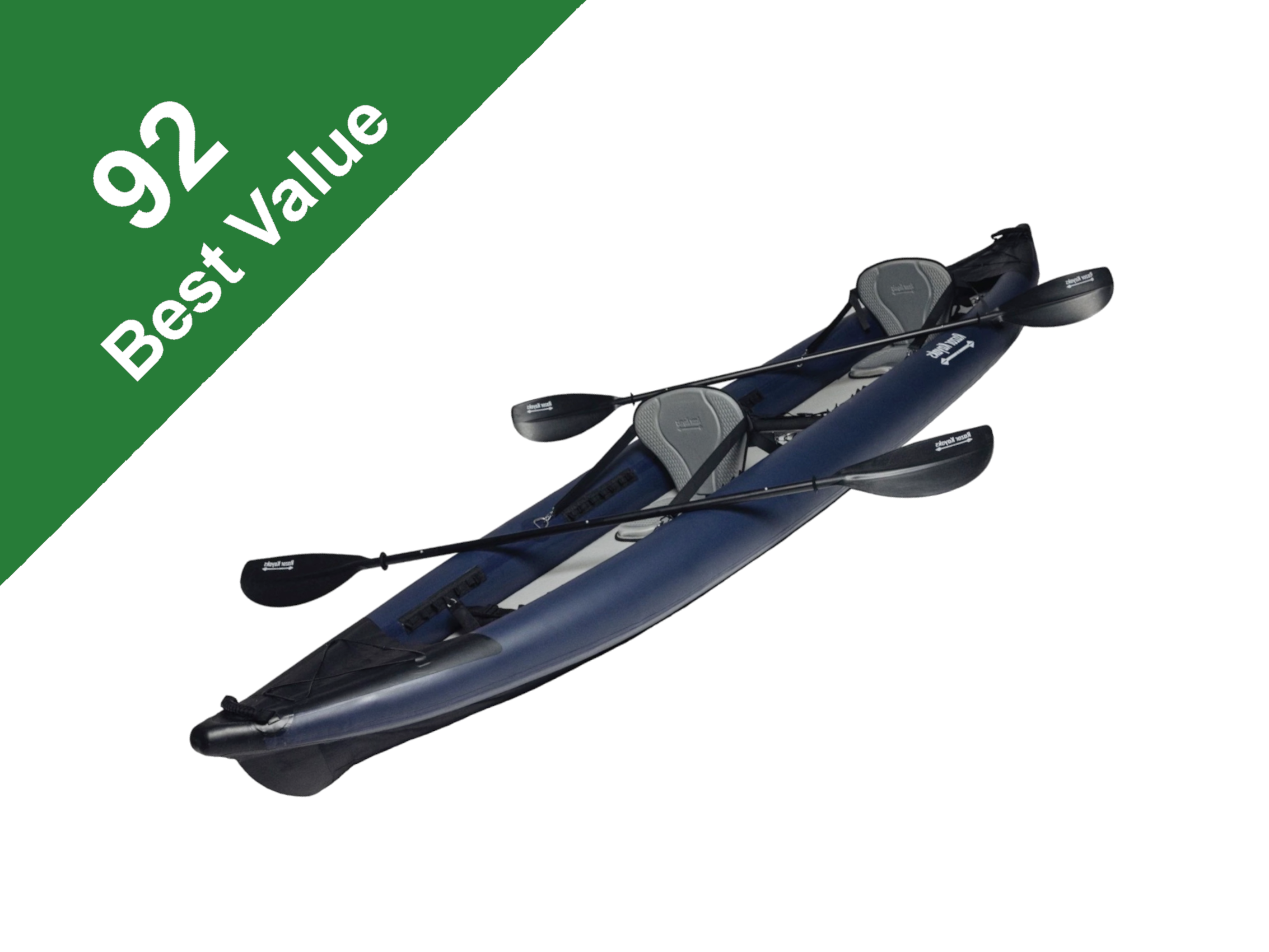
Razor Kayaks R2 Ultra
Price At Time Of Writing | $1,095.00
Overall Rating | 92
Performance | 8
Construction | 7
Setup/Pack Down | 9
Portability | 9
Comfort | 9
Open Size - 14’1” x 31”
Weight - 28 lbs
Load Capacity - 635 lbs
Packed Size - 31” x 20” x 14”
Best For - Recreational paddlers wanting a balance of performance and value
Pros - Drop-stitch construction, easy to paddle, quick inflation
Cons - No integrated waterproof storage compartments
Overall - A fantastic all-around kayak that offers great performance for its price
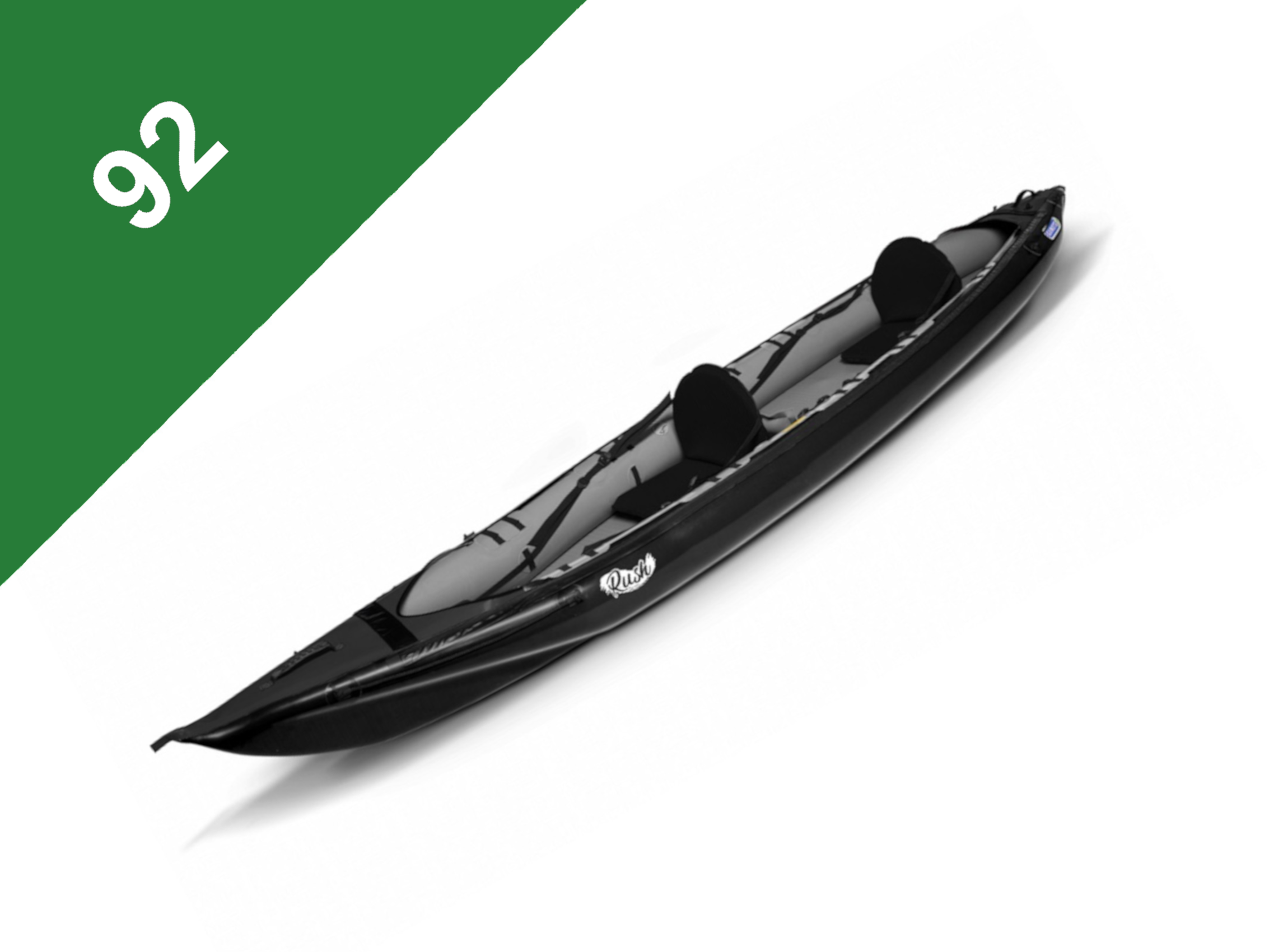
Gumotex Rush 2
Price At Time Of Writing | $2,550.00
Overall Rating | 92
Performance | 8
Construction | 9
Setup/Pack Down | 9
Portability | 9
Comfort | 7
Open Size - 13’ 9” x 2’ 8”
Weight - 34 lbs
Load Capacity - 430 lbs
Packed Size - 27” x 19” x 17”
Best For - Lake touring and flatwater exploration
Pros - Sturdy, comfortable, manoeuvrable
Cons - Expensive
Overall - A high-performance touring kayak

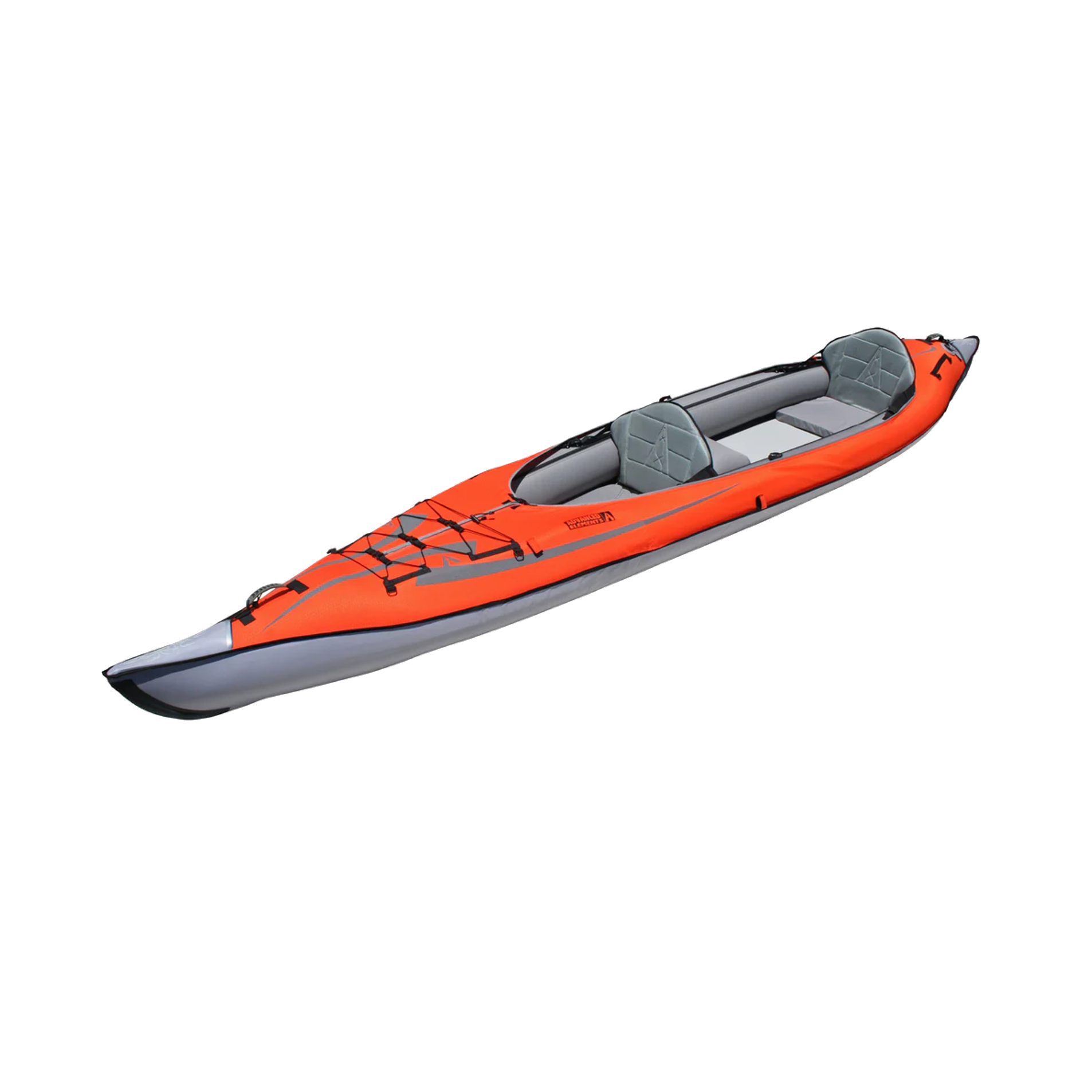
Advanced Elements AdvancedFrame Convertible Elite
Price At Time Of Writing | $1,199.99
Overall Rating | 87
Performance | 9
Construction | 8
Setup/Pack Down | 5
Portability | 7
Comfort | 8
Open Size - 15’ x 2’ 10”
Weight - 56 lbs
Load Capacity - 550 lbs
Packed Size - 37” x 22” x 12”
Best For - Larger paddlers or gear-heavy trips
Pros - Fast, high weight capacity, stable
Cons - Heavy, slow setup, narrow
Overall - A capable but cumbersome expedition kayak
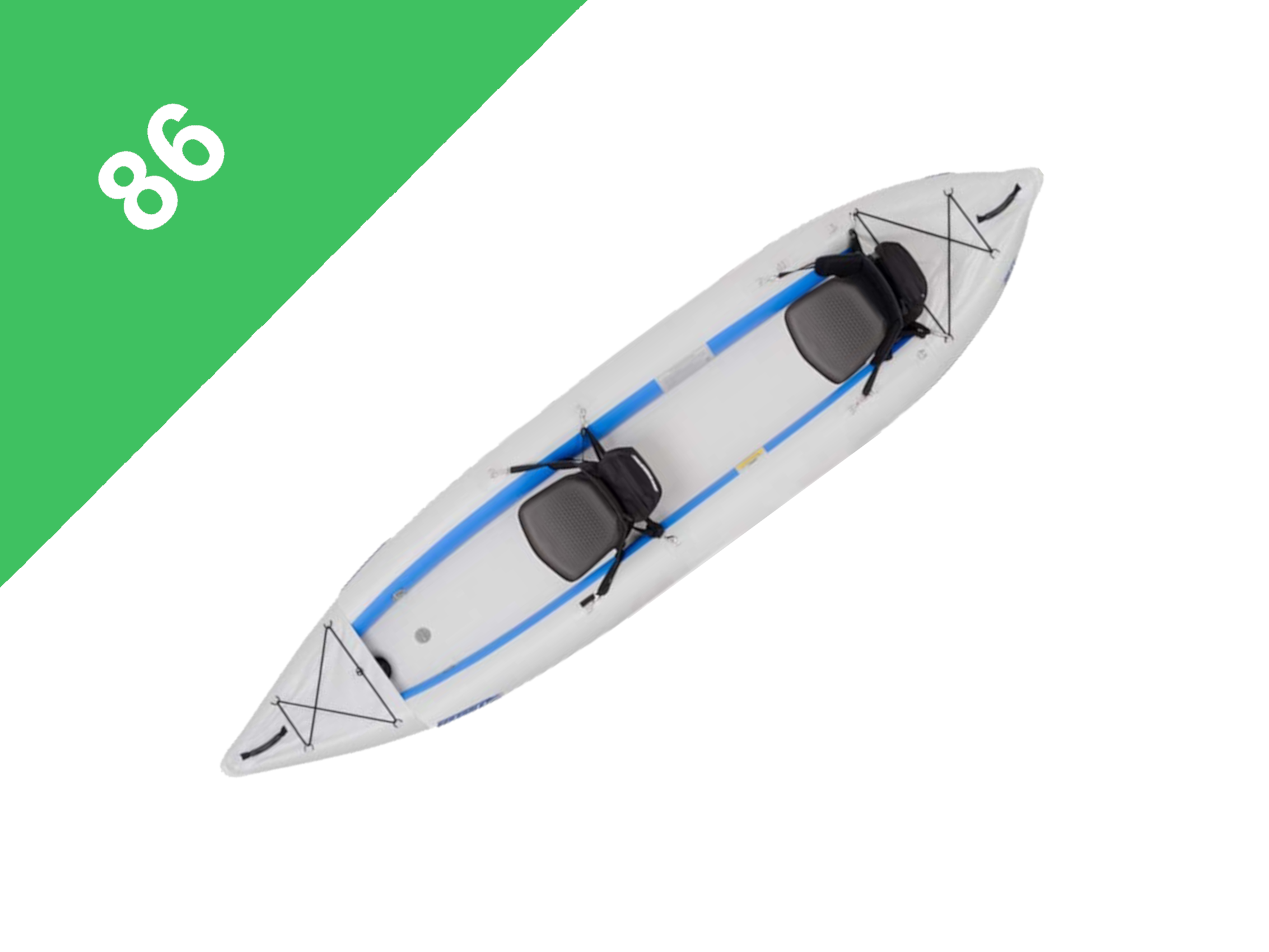
Sea Eagle 385 Fast Track V-Bottom
Price At Time Of Writing | $1,199.99
Overall Rating | 86
Performance | 6
Construction | 8
Setup/Pack Down | 8
Portability | 7
Comfort | 7
Open Size - 12’8” x 36”
Weight - 31 lbs
Load Capacity - 635 lbs
Packed Size - 30” x 17” x 11”
Best For - Portable, stable inflatable kayak fishing
Pros - Excellent tracking, sturdy build, roomy design, quick setup
Cons - Bulky bag, tricky pack-down, seams can react to extreme heat
Overall - A high-performing inflatable that delivers hard-shell speed and versatility
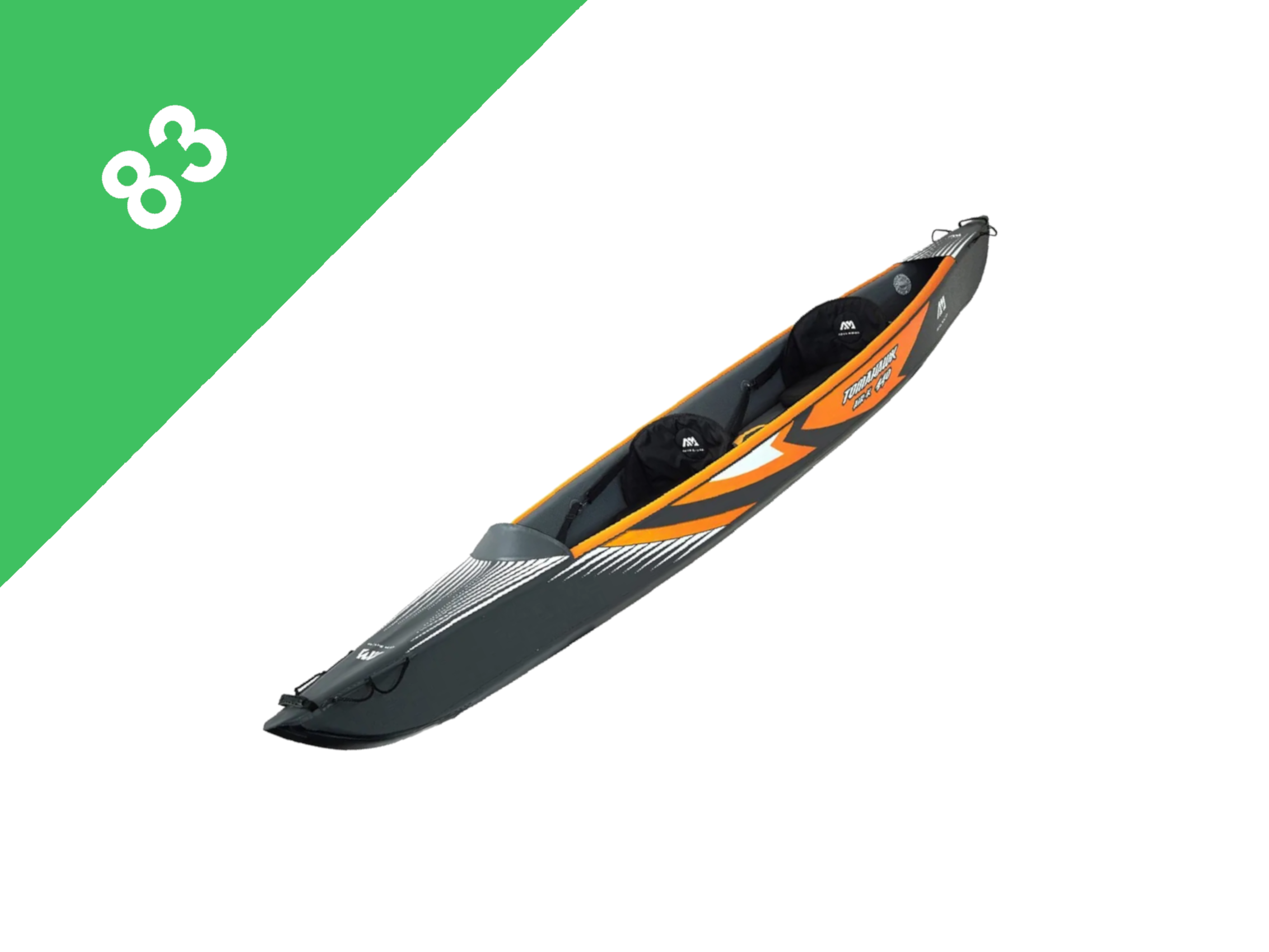
Aqua Marina Tomahawk Air-K 440
Price At Time Of Writing | $849.00
Overall Rating | 83
Performance | 7
Construction | 5
Setup/Pack Down | 8
Portability | 7
Comfort | 6
Open Size - 14’5” x 31”
Weight - 44.8 lbs
Load Capacity - 462 lbs
Packed Size - 39” x 24” x 13”
Best For - Intermediate paddlers wanting hard-shell performance
Pros - Tracking, speed, drop-stitch construction, comfortable seat
Cons - Tricky and lengthy setup, stability, catches wind
Overall - Paddles like a hard-shell but requires patience and skill
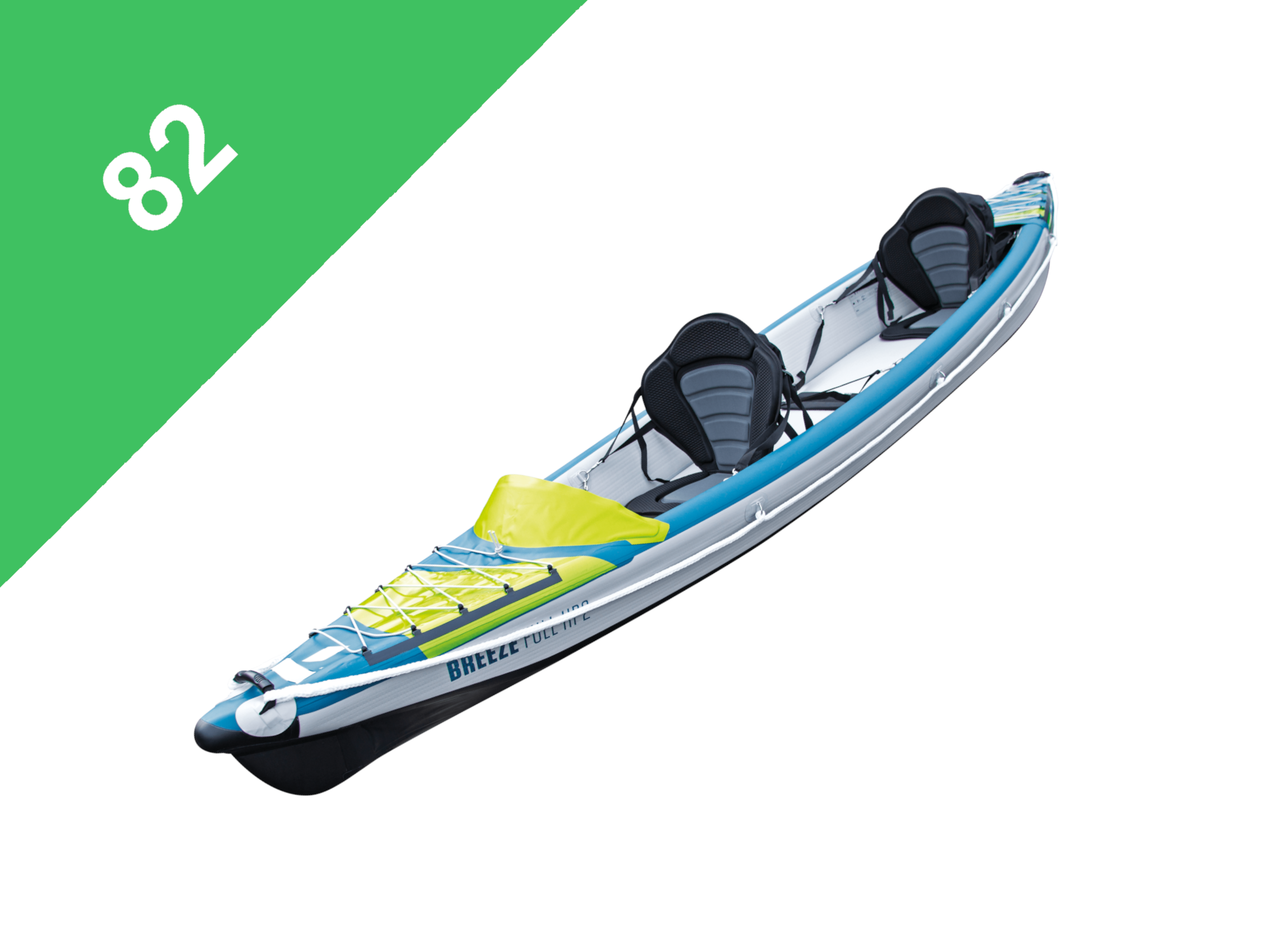
Tahe Breeze HP2
Price At Time Of Writing | $1,624.00
Overall Rating | 82
Performance | 7
Construction | 5
Setup/Pack Down | 8
Portability | 7
Comfort | 5
Open Size - 13’ 5” x 26”
Weight - 34 lbs
Load Capacity - 465 lbs
Packed Size - N/A
Best For - Stable recreational paddling, lakes and calm rivers, solo or tandem use
Pros - Performance, stable, drop stitch, can be paddled solo or tandem
Cons - Low-quality accessories, heavy when packed
Overall - A good choice for paddlers prioritising on-water performance over accessories
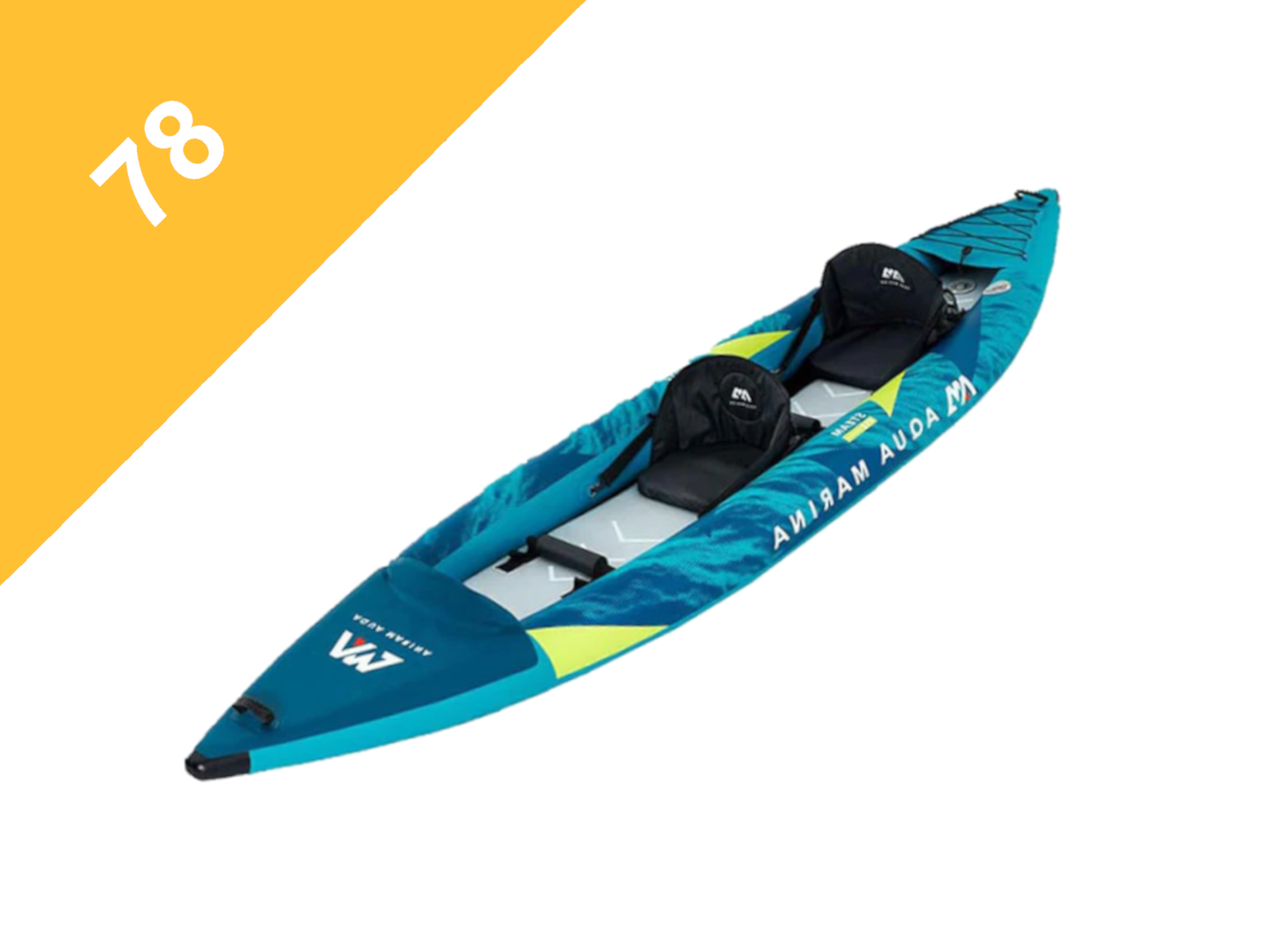
Aqua Marina Steam 412
Price At Time Of Writing | $799.00
Overall Rating | 78
Performance | 6
Construction | 5
Setup/Pack Down | 7
Portability | 6
Comfort | 4
Open Size - 13’6” x 35”
Weight - 34.2 lbs
Load Capacity - 396 lbs
Packed Size - 35” x 23” x 12”
Best For - Versatile tandem paddling, lakes and mild rivers
Pros - Tracks well, stable, great included accessories
Cons - Tight for tall people, side tubes are too soft
Overall - Best for shorter paddlers on calm water, but limited by its size and flexibility
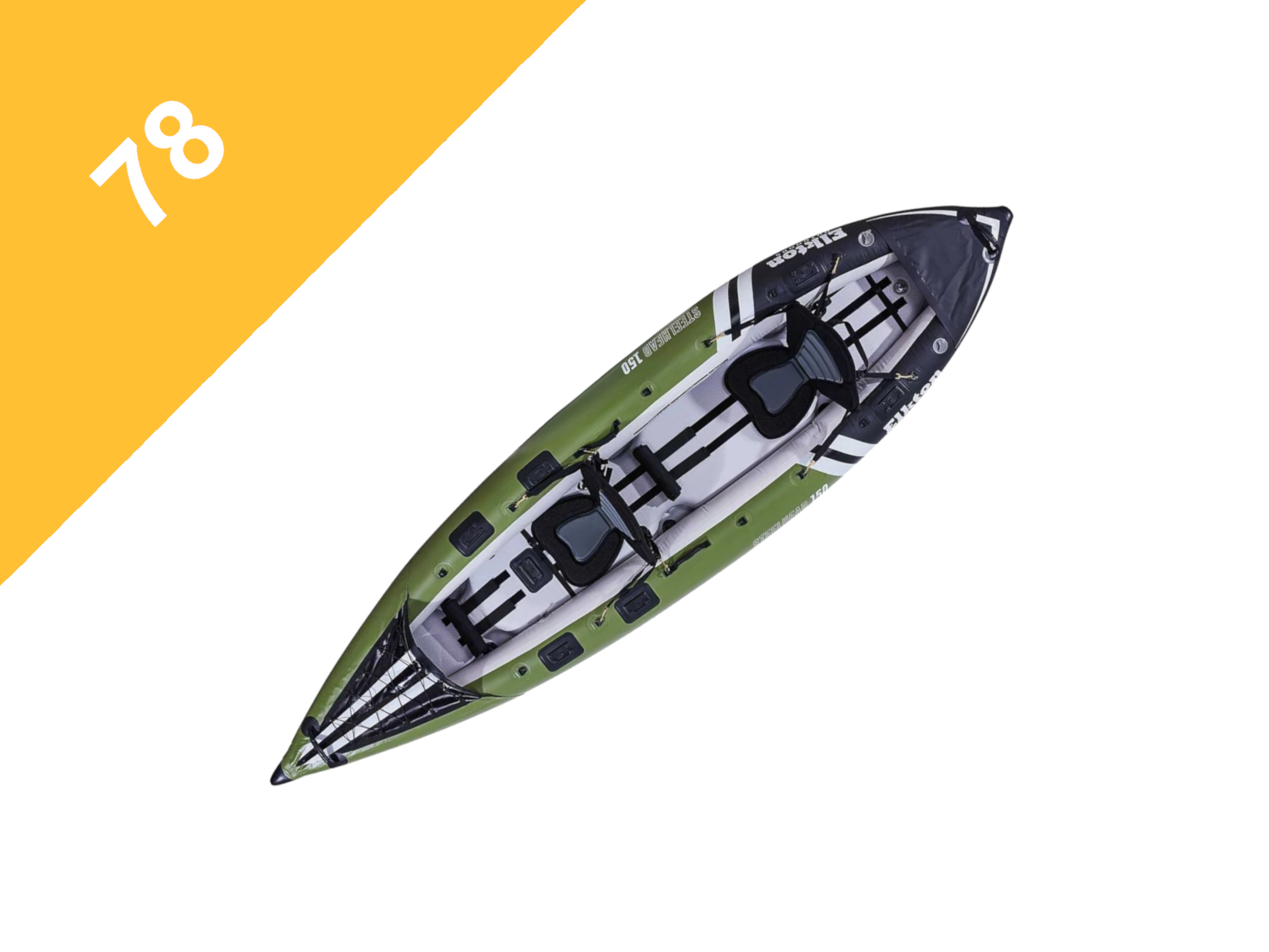
Elkton Outdoors Steelhead
Price At Time Of Writing | $949.99
Overall Rating | 78
Performance | 7
Construction | 5
Setup/Pack Down | 6
Portability | 4
Comfort | 6
Open Size - 12’6” x 39”
Weight - 44 lbs
Load Capacity - 600 lbs
Packed Size - N/A
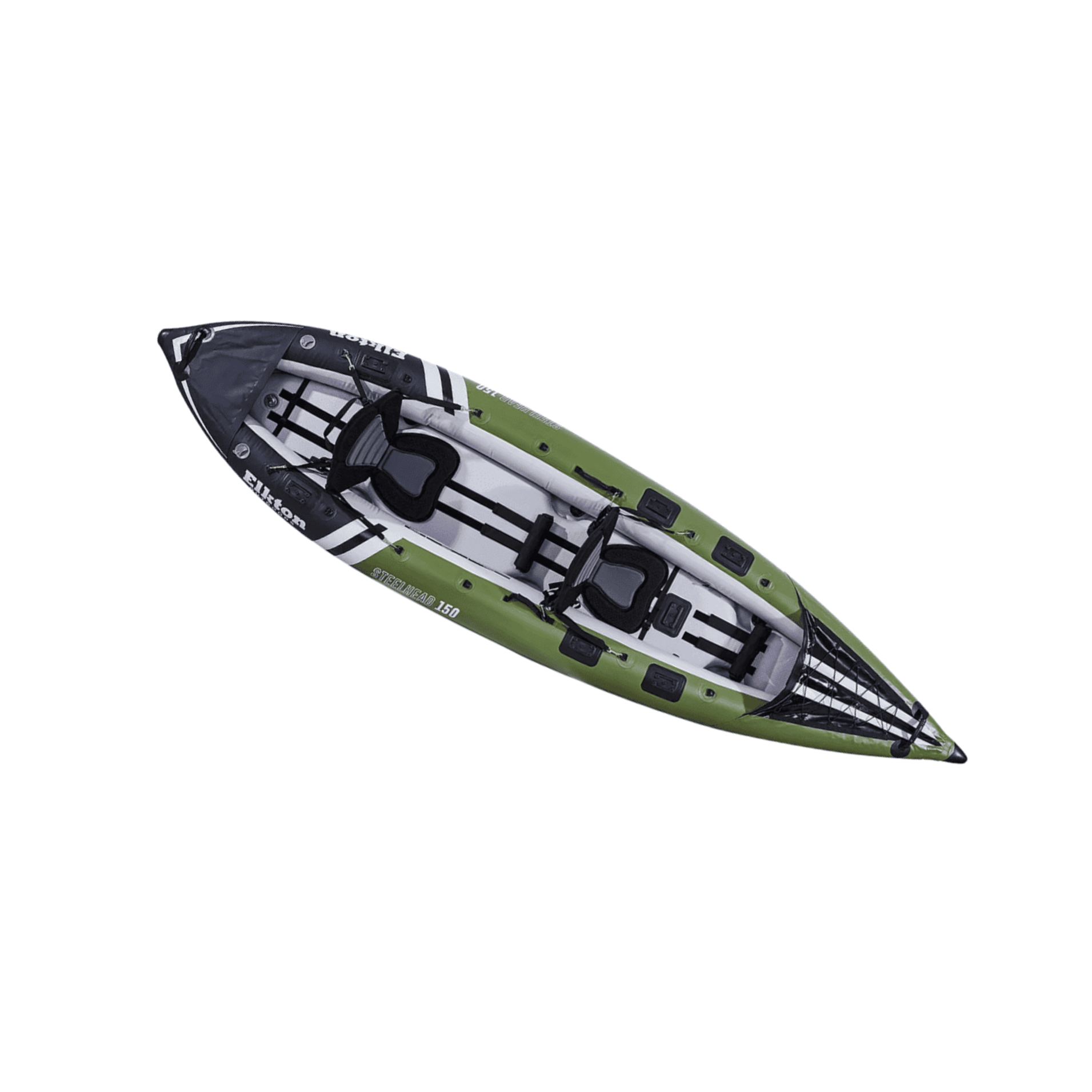
Best For - Stable tandem inflatable fishing with stand-up casting and heavy gear setups.
Pros - Rock-solid stability, great for fishing
Cons - Expensive, heavy, short paddles
Overall - A premium, stable inflatable worth it for serious anglers
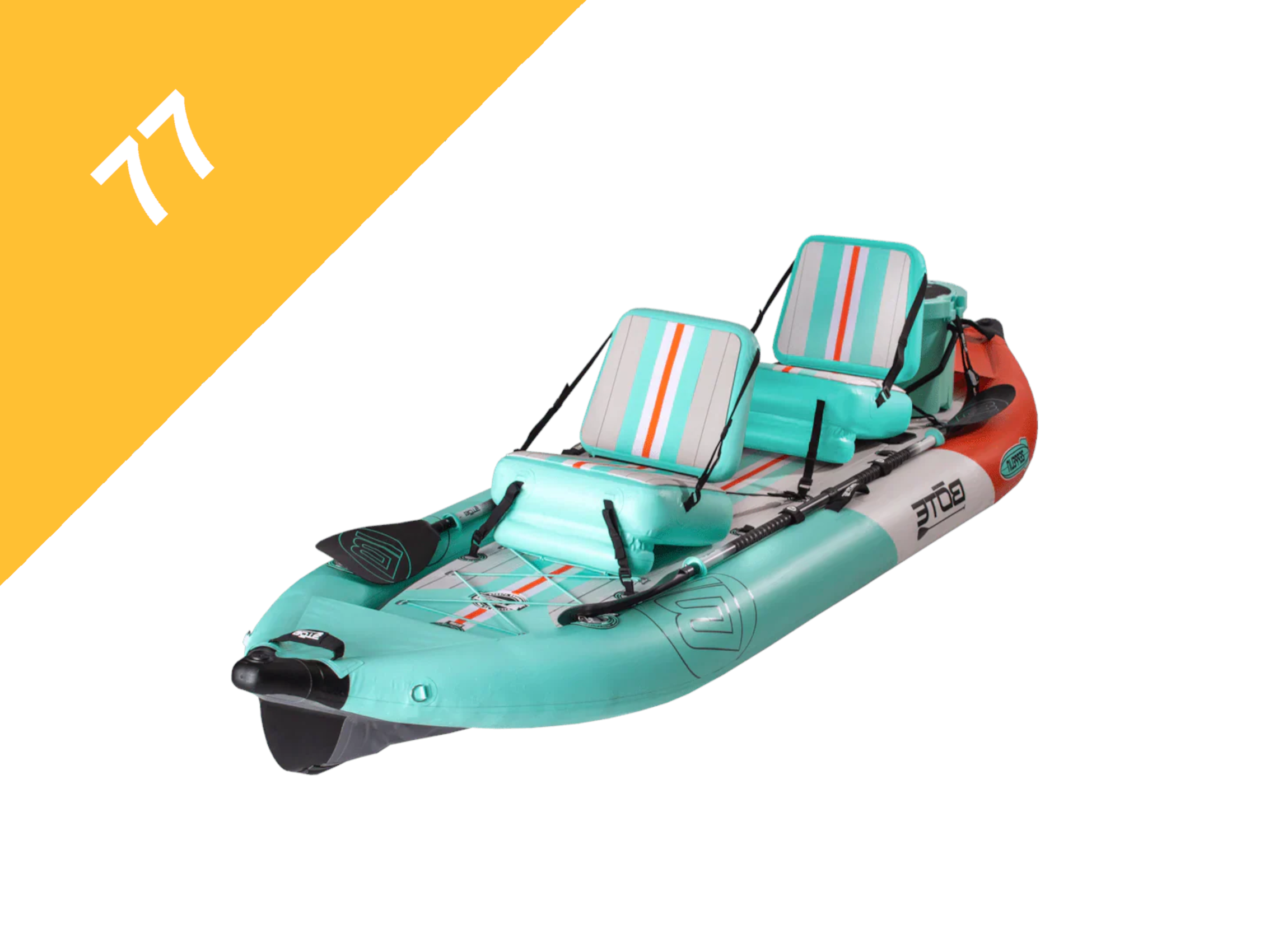
BOTE Zeppelin Aero 12'6"
Price At Time Of Writing | $1,449.00
Overall Rating | 77
Performance | 7
Construction | 6
Setup/Pack Down | 5
Portability | 4
Comfort | 5
Open Size - 12’6” x 38”
Weight - 41 lbs
Load Capacity - 600 lbs
Packed Size - 39” x 28” x 14”
Best For - Paddlers wanting a stable, comfortable and versatile inflatable for solo or tandem use
Pros - Stability, build quality, comfy raised seats, thoughtful accessories
Cons - Heavy to carry solo, slower speed, limited Magnepod mounts
Overall - A well-built, do-it-all inflatable that combines comfort, space and versatility beautifully
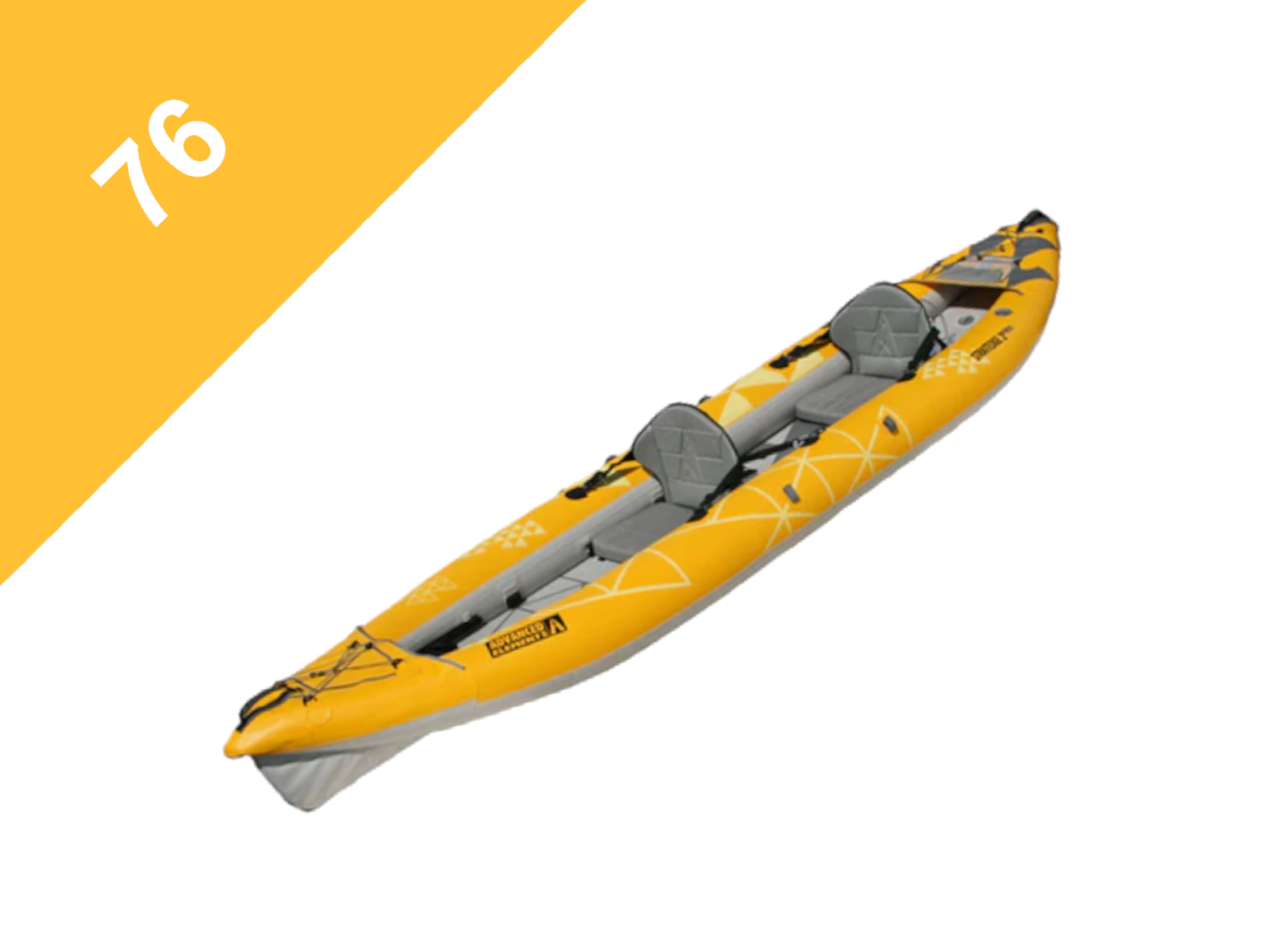
Advanced Elements Straitedge2 Pro
Price At Time Of Writing | $1,199.99
Overall Rating | 76
Performance | 5
Construction | 6
Setup/Pack Down | 5
Portability | 4
Comfort | 6
Open Size - 13’ x 35”
Weight - 41 lbs
Load Capacity - 500 lbs
Packed Size - 38” x 21” x 13”
Best For - Versatile tandem or solo paddling on lakes, rivers, mild whitewater, and recreational adventures
Pros - Lightweight, portable and adaptable
Cons - Poor tracking and slow speed due to its wide, rockered hull
Overall - A niche kayak perfect for short, casual trips
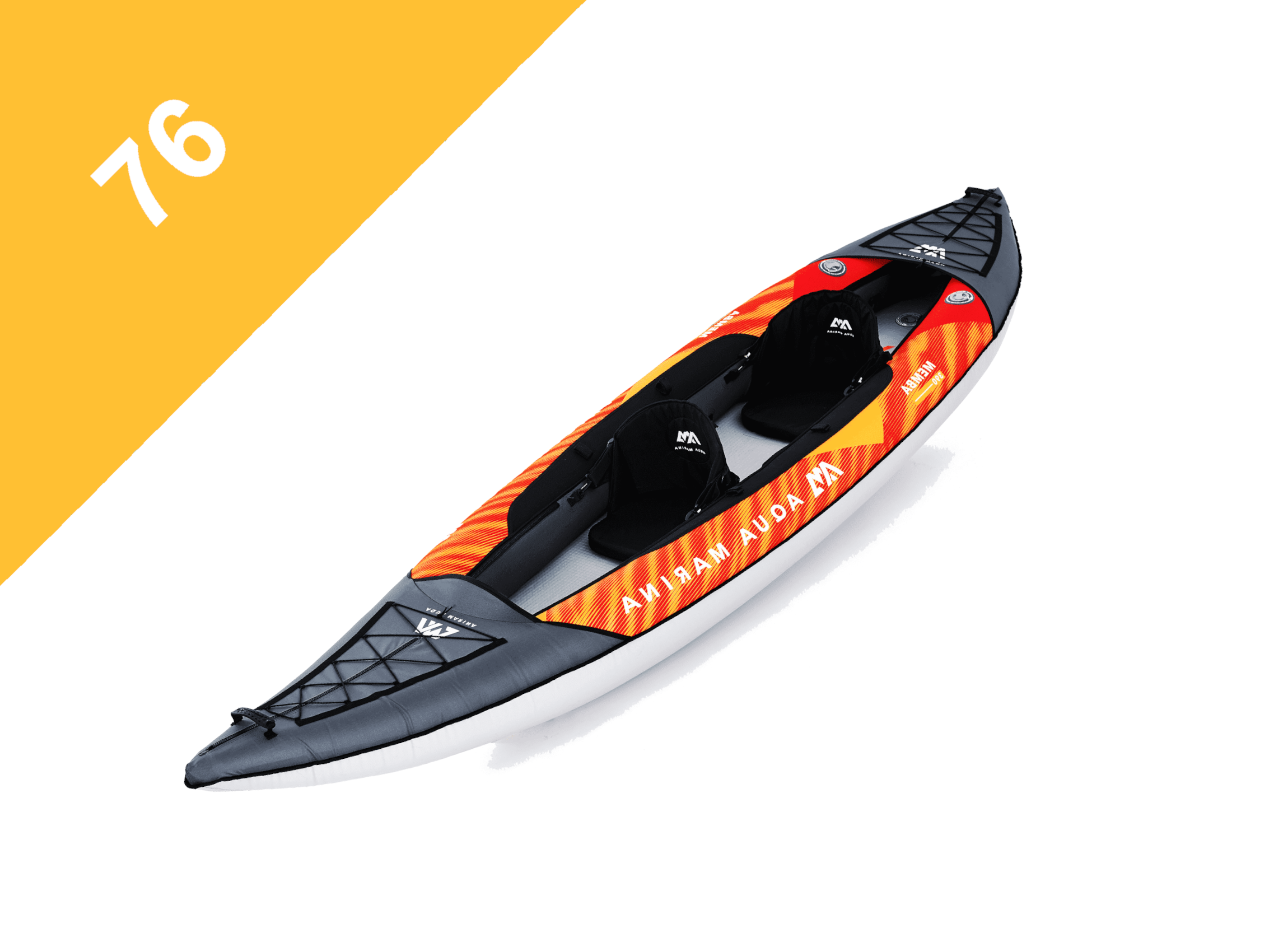
Aqua Marina Memba 390
Price At Time Of Writing | $849.00
Overall Rating | 76
Performance | 6
Construction | 5
Setup/Pack Down | 5
Portability | 6
Comfort | 4
Open Size - 12’10” x 35”
Weight - 37.5 lbs
Load Capacity - 396 lbs
Packed Size - N/A
Best For - Beginners and casual paddlers
Pros - Stable, durable, portable, great tracking
Cons - Uncomfy seats, fiddly pack-down, slight pull
Overall - Strong touring inflatable with minor comfort trade-offs
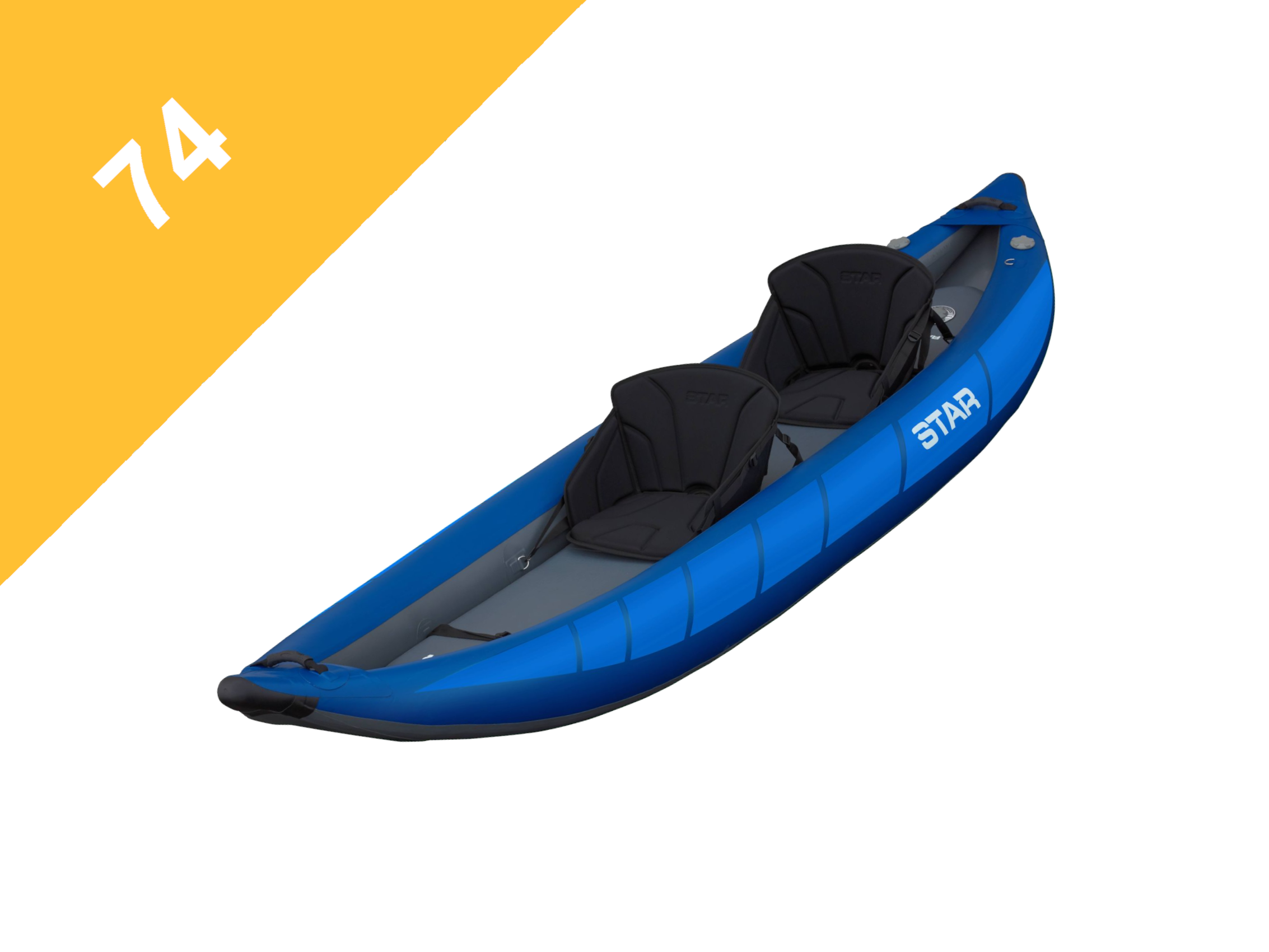
NRS Star Raven II
Price At Time Of Writing | $1,095.00
Overall Rating | 74
Performance | 5
Construction | 4
Setup/Pack Down | 7
Portability | 4
Comfort | 4
Open Size - 12’2” x 38”
Weight - 44 lbs
Load Capacity - 400 lbs
Packed Size - N/A
Best For - Solo paddlers or light tandem use in flatwater and Class II–III whitewater
Pros - Great whitewater performance, comfortable
Cons - Overstated weight capacity causes flooding
Overall - Best for solo paddlers; disappointing for most tandems

Intex Explorer K2
Price At Time Of Writing | $145.19
Overall Rating | 68
Performance | 3
Construction | 4
Setup/Pack Down | 5
Portability | 4
Comfort | 2
Open Size - 10’ 3” x 3’
Weight - 37 lbs
Load Capacity - 400 lbs
Packed Size - 23” x 13” x 16”
Best For - Beginners and casual paddling
Pros - Affordable, stable, inflates quickly, easy to paddle
Cons - Poor tracking, catches wind, minimal storage
Overall - A budget-friendly option for calm water

Intex Challenger K2
Price At Time Of Writing | $126.99
Overall Rating | 64
Performance | 3
Construction | 2
Setup/Pack Down | 5
Portability | 3
Comfort | 1
Open Size - 11’ 6” x 2’ 6”
Weight - 38 lbs
Load Capacity- 400 lbs
Packed Size - 28” x 18” x 12”
Best For - Families and first-time users
Pros - Very affordable, stable, simple
Cons - Uncomfortable, not durable
Overall - A disposable entry-level kayak
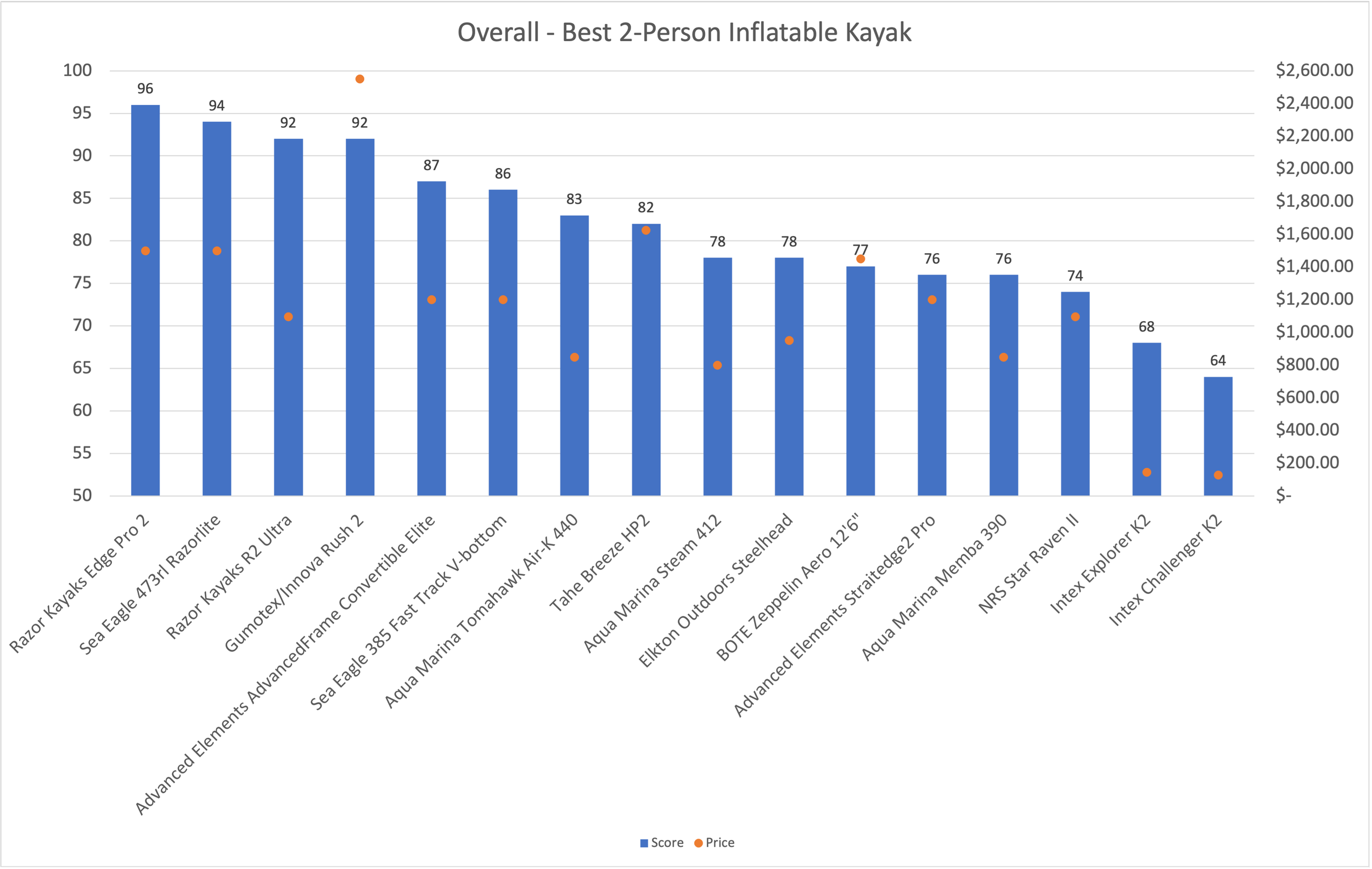
Watch our video review for more detail on how we tested and ranked this year’s kayaks
Prefer to watch the video on its own? Head to our best 2-person inflatable kayak video page.
Advice We’d Give to A Friend
The Basics
How do 2-person inflatable kayaks perform? - At first, we thought these kayaks wouldn't be as good as regular hard shell kayaks, but it turns out that some of them actually perform just as well. This is mainly true for the higher-quality (and usually, more expensive) ones and it's not surprising that some cheaper models are slower in the water. Our drop-stitch explainer is a good place to start if you want to understand more about the differences in performance between different types of inflatable kayaks.
Will they puncture or fall apart? - In general, no. The top-notch 2-person inflatable kayaks are super tough; some even employ materials with a density of 1,000 deniers, similar to what's used in rescue boats. Less expensive models might be crafted from materials resembling pool toys, so it's better to steer clear of those, in our opinion.
How onerous is setup? - Usually, 2-person inflatable kayaks are quick to both set up and pack away, though this can vary depending on the kayak. Some take a little more time because they have multiple points to inflate. For example, the AdvancedElements Convertible Elite takes about 15 minutes to assemble as it has many valves and accessories to insert.We find that kayaks with around 3 inflation points are preferable for this reason. Similarly, some 2-person inflatable kayaks come with a fabric skin on the outside - this can look nicer and offer more durability than lower-grade PVC, but will take a lot longer to dry and may go moldy in storage. We recommend choosing kayaks with a hull of durable, high-density PVC that will dry more quickly.
Should I get a 2-person inflatable kayak? - Yes. Beyond the clear advantage of easy storage, they also unlock fresh opportunities to venture into the wild. Their portability and user-friendliness on the water make them an excellent addition to your outdoor gear.
How long do 2-person inflatable kayaks last? - Top-quality kayaks can last for years. While less expensive models might have a shorter lifespan, taking good care of them (eg. drying and storing them properly) can certainly extend their longevity.
Budget
The price plays a major role when choosing the right 2-person inflatable kayak to purchase. We divide the market into three main categories:
Over $1000 - At this price range, you can expect to find excellent, well-built kayaks.
$400 to $1000 - Kayaks in this price bracket are still of good quality, but they might sacrifice a bit on performance. They could be slightly slower and bulkier in the water compared to high-end models. There are exceptions, though, and with the right knowledge, you can find a fantastic kayak for a reasonable price.
Under$400 - In this category, there are some poorly made kayaks that are sluggish in the water, challenging to paddle and made from lower-quality materials. We recommend investing a bit more for a kayak that offers good performance and quality.
Purpose of Use
If you plan to use your kayak mainly for regular exercise or extended tours spanning multiple days, it’s best to opt for the $1000+ range. If you’re planning on recreational paddling or sporadic use, a mid-range kayak should suit you well. If you can manage it, we recommend considering the mid-range option rather than the under $400 option because you'll get a kayak that lasts much longer for the price.
Pure 2-Person vs. 1–2-Person Convertible Kayaks
Pure 2-person inflatable kayaks are designed specifically for two people to paddle together, offering a fun, shared experience. Can one person use a two-person inflatable kayak? Yes. There are 1–2-person convertible kayaks that can be adjusted to accommodate either one person for a more spacious ride or two people for a cosy tandem adventure.
If you’re contemplating a 1–2 or even 2–3-person convertible kayak, take note of the length. If a kayak is too short, it will be uncomfortable for two or more people. Look for kayaks that are at least 13’ 11” long to ensure you’re not going to be cramped.
US-Specific Considerations
When shopping for a 2-person inflatable kayak in the US, there are a few considerations that are worth thinking about beyond the obvious features like price and weight.
Freshwater vs. saltwater use - The US has no shortage of amazing paddling spots, from calm lakes in Minnesota to saltwater bays in Florida and California. Saltwater use in particular can be tough on inflatable kayaks. PVC and rubber are durable, but salt can corrode zippers, valves and fittings if you don’t rinse your kayak with fresh water after every trip. If you’re planning to spend a lot of time on the coast, it’s worth investing in a kayak with marine-grade materials and stainless-steel fittings.
Sun and UV damage - UV intensity is no joke, especially if you’re paddling in southern states or out west. Extended sun exposure can weaken inflatable materials over time, making them more brittle and prone to leaks. Look for kayaks with UV-resistant coatings or covers and don’t underestimate the importance of a kayak cover if you plan to store it outside or in your truck bed. A simple UV spray can also help add a layer of protection.
Storage and transport - Many of us in the US drive SUVs or pickup trucks, so storage may not seem like a problem, but plenty of people want to squeeze their kayak into the trunk of a sedan or even fly with it to destinations like the Florida Keys or Lake Tahoe. In those cases, check the packed dimensions and overall weight. Some premium 2-person inflatables pack surprisingly small, which is a big plus if you’re dealing with limited space.
Warranty and repair support - This is an often-overlooked point, but a big one. Accidents happen and it’s reassuring to know you can get replacement parts quickly. Many US-based companies like Advanced Elements, Sea Eagle and Aquaglide have strong warranty and repair programs. Having a brand with US-based customer support means you can get valves, seats, or repair kits shipped faster compared to ordering internationally.
Water conditions and paddling style - Inflatable kayaks in the US get used in very different environments, such as calm lakes, wide rivers, surfy coastal bays and even slow-moving whitewater. If you’re mainly paddling big rivers like the Mississippi or Colorado, tracking (how straight the kayak holds course) is important, so look for models with drop-stitch floors or detachable skegs. If you’re more about coastal bays or inlets, stability might matter more, especially with two people in the boat. Think about where you’ll paddle most often and let that guide your choice.
Safety Checklist
Always Wear a Coast Guard-Approved PFD - In the US, life jackets are required by law. The U.S. Coast Guard mandates that every person onboard a kayak must have a properly fitted, Coast Guard-approved personal flotation device (PFD).
Check Local Water and Weather Conditions - Before heading out, look up waterway advisories and weather updates. Even calm rivers can turn dangerous after heavy rain and coastal areas can be tricky with tides and winds. The National Weather Service provides excellent boating forecasts and alerts across the US. Make it a habit to check just before you launch.
Pack Safety Gear and a Repair Kit - Inflatable kayaks are tough, but accidents happen, like scraping over sharp rocks or oyster beds. Bring a simple repair kit (patches, pump and duct tape as backup), along with essentials like a whistle (required in most states), a dry bag with your phone in a waterproof case and a basic first aid kit.
Which 2-Person Inflatable Kayak is Right for You?
I'm looking for a 2-person inflatable kayak…
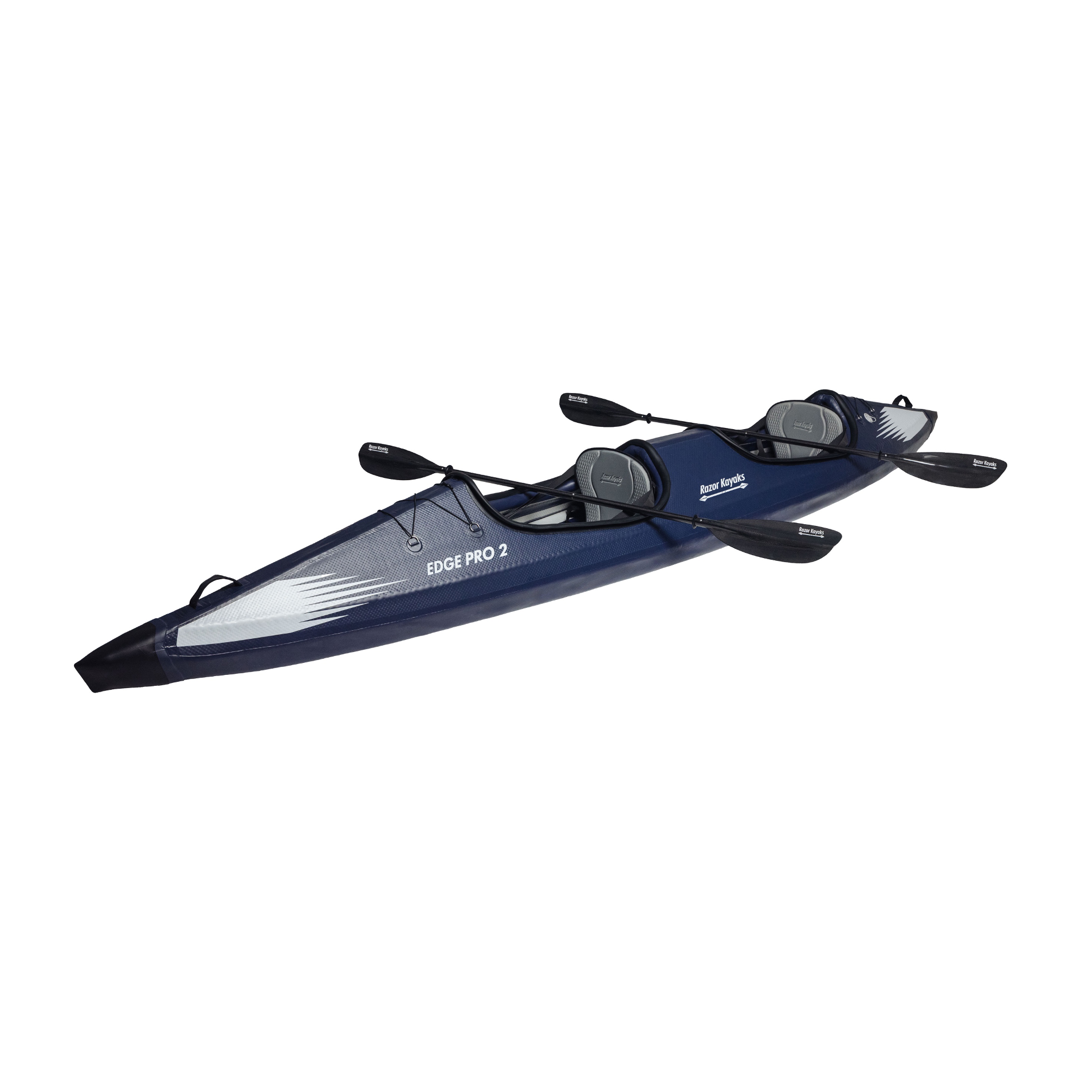
…that feels like a hard-shell kayak
The closest inflatable feel to a rigid tandem kayak — fast, stable and exceptionally comfortable for two.
…for long-distance paddling and touring
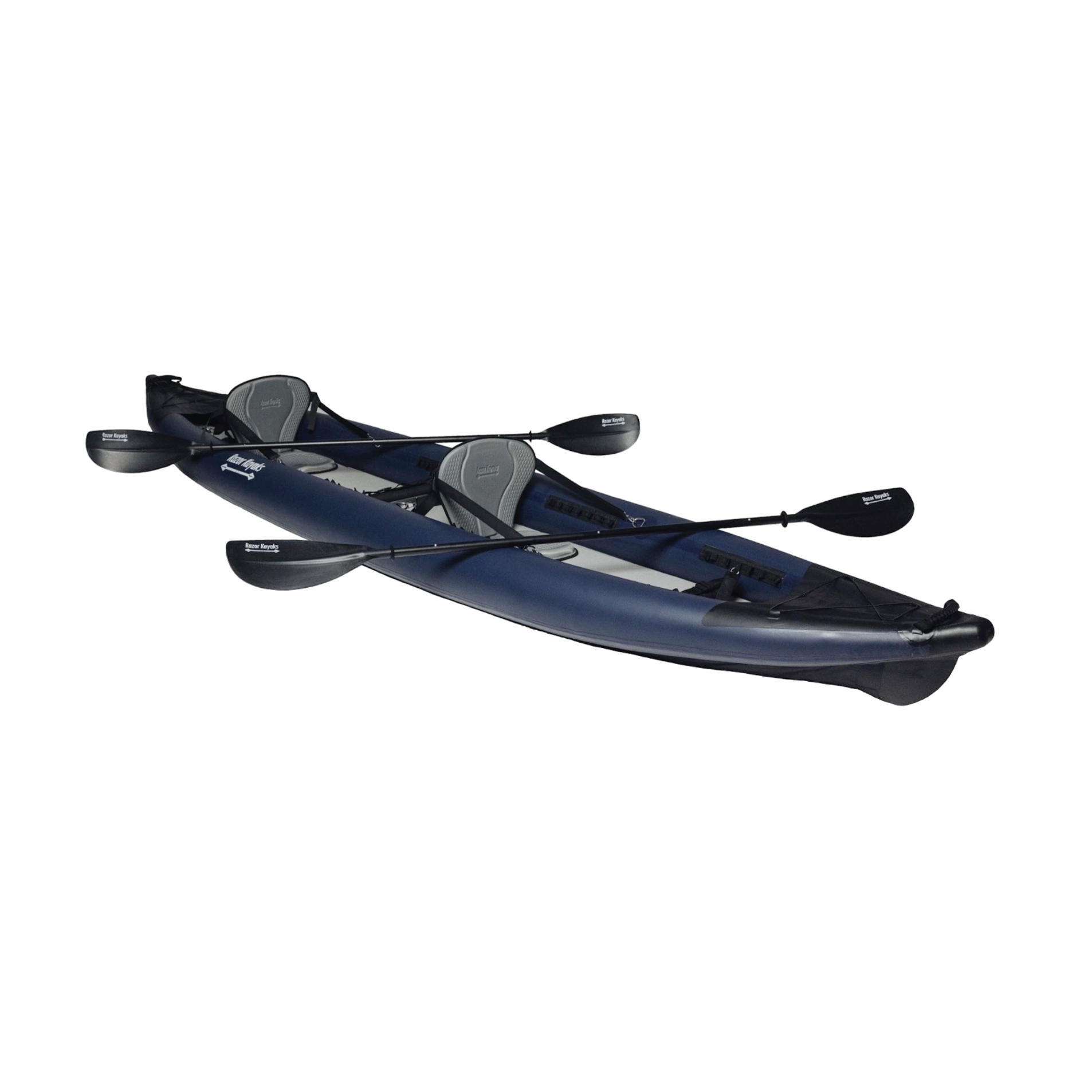
Built for speed, efficiency and long-haul comfort over serious distances on lakes and open water.
…that's a true all-rounder
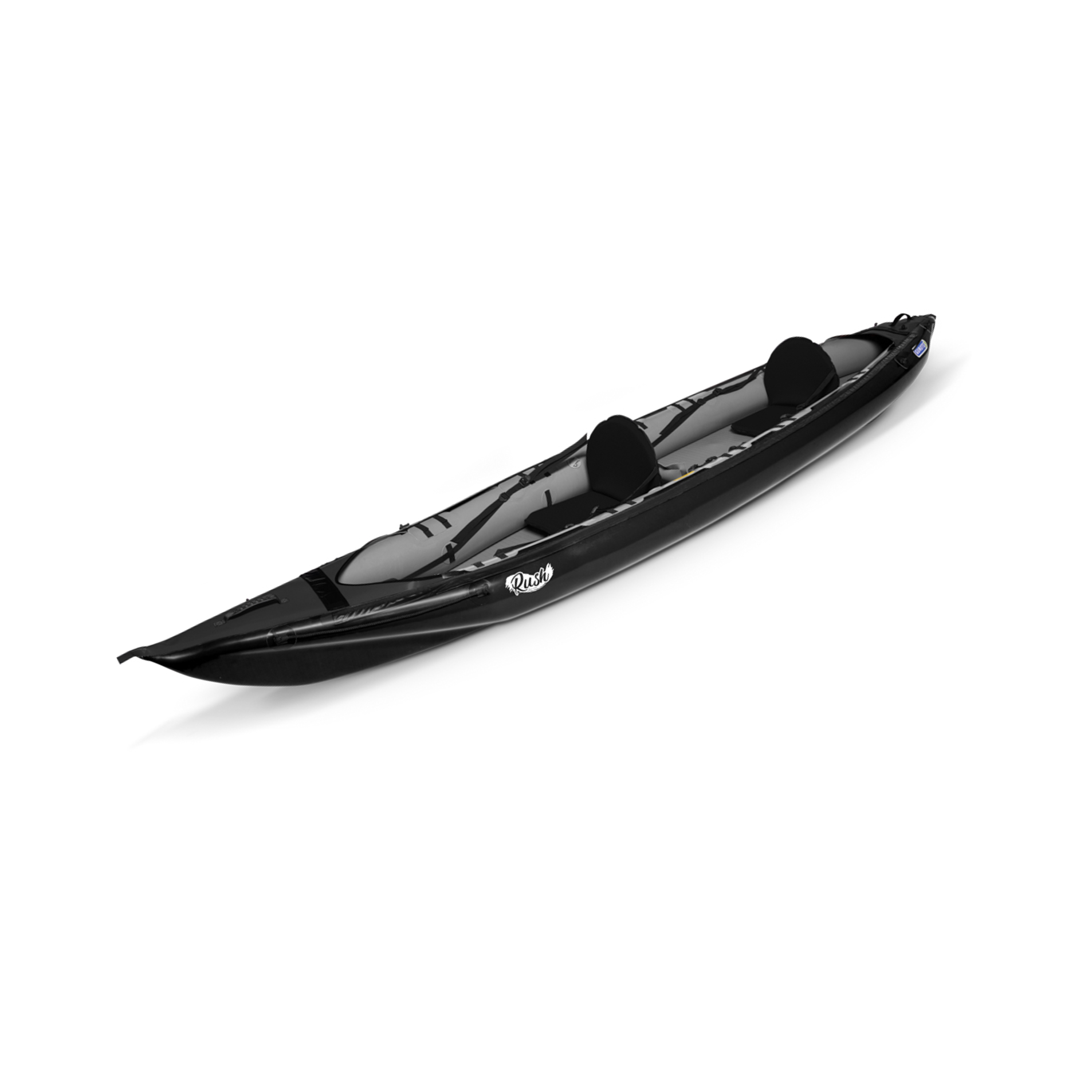
Drop-stitch construction, lightweight, quick to inflate and great performance — excellent value for most paddlers.
…with maximum stability
Wide, sturdy builds that keep two paddlers confident on the water without sacrificing too much performance.
…for fishing
Rock-solid stability for stand-up casting, heavy gear setups and serious anglers who want room for two.
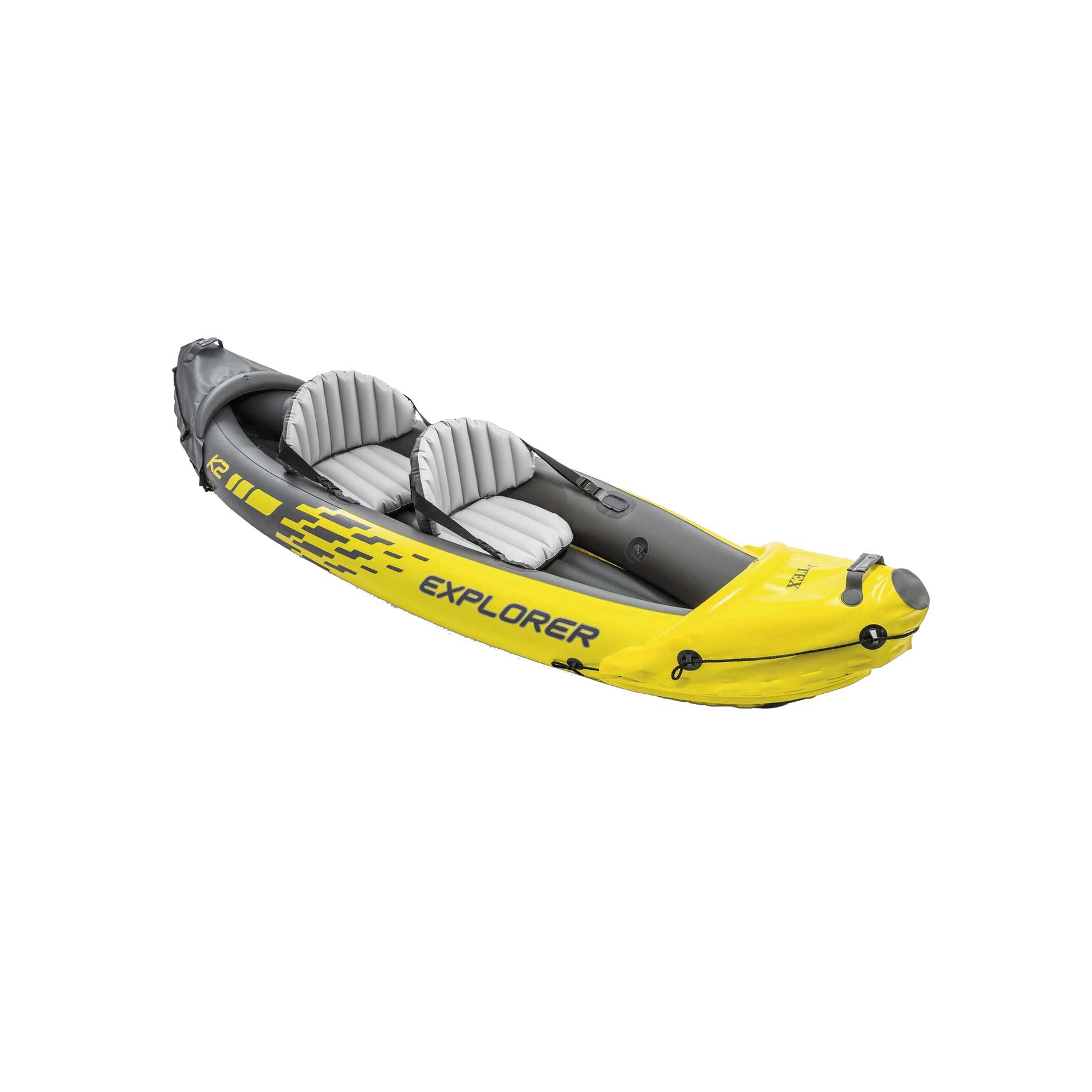
…on a very tight budget
Extremely affordable for calm-water recreation. Expect trade-offs in tracking, comfort and durability.
Ratings By Category
Method
We have a systematic process that helps us analyse and understand the qualities of each product. After surveying the market, we choose what we consider to be the finest inflatable kayak in different categories, drawing from various retailers. Every chosen product receives an initial score of 50 points. Next, we conduct field tests and hands-on evaluations to rate them on a scale of 1 to 10 in the areas of Performance, Construction, Setup/Pack Down, Portability and Comfort.
To ensure fairness, we adjust rankings based on importance and degree of variation. For example, some categories are scored from 1 to 10, while others might use a range like 4 to 9, occasionally including outliers. Our aim is to offer a clear and truthful overview of how we rate each kayak and the reasons behind it.
For those looking for a 2-person inflatable kayak in the US, our goal is to equip you with all the information you require. We believe a comprehensive inflatable kayak review should allow you to make informed decisions, whether you're searching for a kayak tailored to a specific purpose or the ultimate all-rounder.
Testing Methodology
All the tandem inflatable kayaks we review are tested hands-on by two paddlers in US paddling spots like lakes, rivers, and coastal bays. Once we’re out there, each model goes through a thorough setup and inspection, checking build quality, valves, seam strength, and how easy it is for a couple to inflate, deflate, and pack it away. We also measure the weight, inflated dimensions, and packed size to make sure they line up with the manufacturer’s claims.
Next, we put the tandem kayaks through performance trials built for two people paddling together. That means testing speed over distance, how well it tracks in calm water and against typical American winds, and how nimble it is in tight spots. We check stability with two adults plus gear, seating comfort for both over longer outings, and how it handles different loads and light chop, just like you’d find in US harbors, bays, or estuaries.
Finally, we dig into long-term durability and usability with repeated inflate/deflate cycles, checking for wear from common launch spots like sandy beaches, boat ramps, or rocky shores. We also test how practical it is for two people to carry it from the car to the water. These results get weighted into our category scores, so the final ranking shows not just the specs, but how the kayak really works for a duo in everyday use. Our Awards are then based on these final scores, as well as if they stood out as a top performer against specific criteria or for a particular use case.
Want the full scoop on our testing process? Just click the drop-downs below for all the details.
-
Before we take any two-person inflatable kayak out on the water, we give it a thorough once-over to check its build quality, spec accuracy, and real-world readiness.
Unboxing and component check: We make sure all the promised parts and accessories are there and up to snuff, like seats, footrests, skegs, pumps, carry bags, repair kits, and valve adapters. Anything missing or cheaply made gets flagged right away.
Material and build assessment: We inspect the hull up close for fabric thickness (PVC, drop-stitch, Hypalon, etc.), seam quality (welded or glued), deck rigidity, handles, spray guards, attachment points, and reinforcing patches. We're on the lookout for sloppy seals, excess glue, crooked seams, or loose stitching.
Inflation, PSI, and leak detection: We pump each kayak up to its recommended PSI with a precise gauge, let it sit for 12–24 hours, and do soap bubble tests or spot submersion checks to catch valve leaks, seam bubbles, or any slow pressure drops.
Measurement and spec verification: We measure key details and compare them to the manufacturer's claims, including inflated weight (sans accessories), overall length, width, and height, cockpit space and seating length, plus packed size for storage.
-
To properly test how a tandem kayak works for two people (and solo for versatility), we put each one through trials on US lakes, rivers, and sheltered bays with two paddlers aboard, and then one paddler solo. We check:
Speed and glide testing : We paddle just over a 200-yard distance in flat water with two average-weight paddlers using the same paddles, timing it to figure out speed and how smoothly it glides.
Tracking and directional stability: On straight-line runs in light wind, we see how well it holds course without constant corrections or side-to-side yawing. Kayaks with skegs or defined chines get a fair side-by-side comparison.
Maneuverability and turning radius: We practice wide sweeps, tight turns, and pivots to judge how easy it is to redirect with two aboard, plus how it responds if one paddler stops (which happens a lot in real life).
Primary and secondary stability: We test both types:
Primary: How rock-solid it feels when boarding, sitting still, or shifting around.
Secondary: How it handles when leaning, edging, or hitting light wakes from other boats.
Load, balance, and weight distribution: We reload with gear at 50% and 80% capacity and retest handling to spot any sagging, bow rise, or flex that hurts touring reliability.
Chop, wake, and coastal handling: Where we can, we paddle through wind chop or boat wakes to check spray control, hull rigidity, deck flex, and how forgiving it is in bumpy stuff, plus self-bailing if equipped.
Comfort over distance: On longer 3–6-mile outings, we review:
Seat support and lower back comfort (no fatigue after hours).
Legroom and foot brace adjustability.
Paddle clearance, especially for the rear paddler.
Whether paddlers bump paddles or feel cramped together.
-
Beyond first impressions, we stress-test materials and fittings to see how the tandem kayak holds up over seasons of use on US lakes, rivers, and beaches. We put them through:
Abrasion testing: We drag or rest the underside and side tubes on real-world surfaces like gravel, sand, or rocky riverbanks to check scuff resistance and any signs of delamination.
Inflation cycle and valve stress: We repeatedly deflate and reinflate (dozens of times) to spot valve wear, PSI drops, seam stretch, or creases that could shorten its life.
UV and weather exposure: Leaving it out in the sun and dry heat (or salty mist) shows us how well coatings, colors, and adhesives handle fading, stiffening, or residue buildup.
Attachment and fitting strength: We load-test handles, D-rings, bungee cords, and seat clips to uncover weak spots or poorly reinforced anchors.
Repair readiness: We test how simple it is to slap on patch kits and whether the material grabs adhesive reliably, which is really important for those who enjoy remote paddles, but who are far from help.
-
A good 2-person inflatable kayak has to be easy to handle both on and off the water, so we test how practical each one is for everyday US paddlers heading out to lakes, rivers, or bays.
Setup and pack-down time: With the included pump, we time how long it takes to inflate to full PSI, install seats, and add accessories like thigh straps or spray decks. We judge each step for simplicity, effort, and user-friendliness, then check deflation, drying, and how neatly it stows back in the bag.
Transport and carry comfort: We haul the packed (and sometimes inflated) kayak short distances to test the following:
Bag comfort and strap design.
Weight balance and handle options.
Whether one person can realistically manage it solo.
Storage space requirements: We see how compact it folds or packs and how easily it fits into car trunks, roof racks, or camper setups without taking over your whole garage.
-
Each tandem kayak gets a score out of 10 across five key categories that feed into our overall rating for US paddling on lakes, rivers, and bays:
Performance (30%): Covers speed, tracking, handling, and stability with two aboard.
Construction (25%): Focuses on material quality, seams, valves, and long-term durability.
Setup/Pack-down (15%): How quick and easy it is to inflate, rig up, and stow away.
Portability (15%): Weight, carry comfort, and storage fit, balanced against build quality so lightweight but flimsy models don’t get a free pass.
Comfort (15%): Seating, legroom, back support, and how it feels after hours of paddling together.
We normalize, weight, and combine the scores, tweaking for standout strengths or dealbreaker flaws, so top performers shine and underachievers get called out fairly.
This structured approach keeps our reviews transparent and grounded in actual field testing, meaning when we recommend a tandem kayak, it’s because we’ve paddled it duo-style ourselves and know it delivers on the water with your paddling partner.
Performance
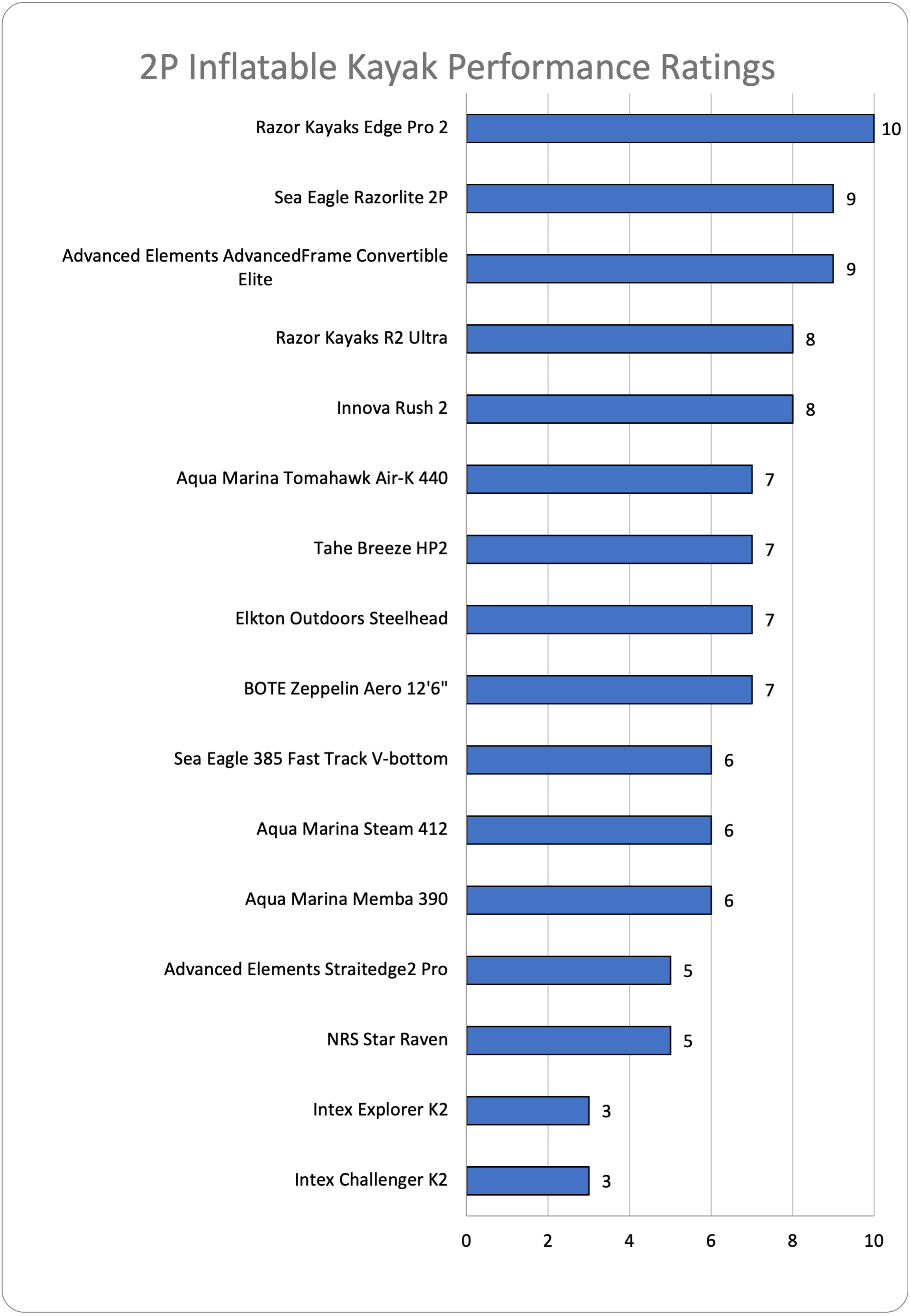
There are four main elements we consider in the performance category: How fast it can be paddled through water, how maneuverable it is, how well it paddles in a straight line and how stable it is.
Models like the Razor Kayaks Edge Pro 2 and the Sea Eagle 473rl feel fast and smooth, slicing through waves and holding speed well thanks to their pointed bows, V‑shaped or double‑concave hulls, and stiff drop‑stitch floors. The Edge Pro 2 tracks especially well thanks to its skeg and curved‑diamond hull, so it stays on course without constant correction, even when fully loaded.
Other kayaks, like the Aqua Marina Tomahawk 440 and the Memba 390, strike a nice middle ground. They’re not racing machines, but their long, streamlined shapes and removable fins help them glide efficiently and stay fairly straight without sacrificing too much stability. Meanwhile, touring‑style inflatables such as the Advanced Elements StraitEdge 2 Pro and the Tahe Breeze HP2 focus on rock‑solid stability and predictable tracking over raw speed, so they feel secure and easy to paddle in open water or on rivers, even if they’re not the quickest.
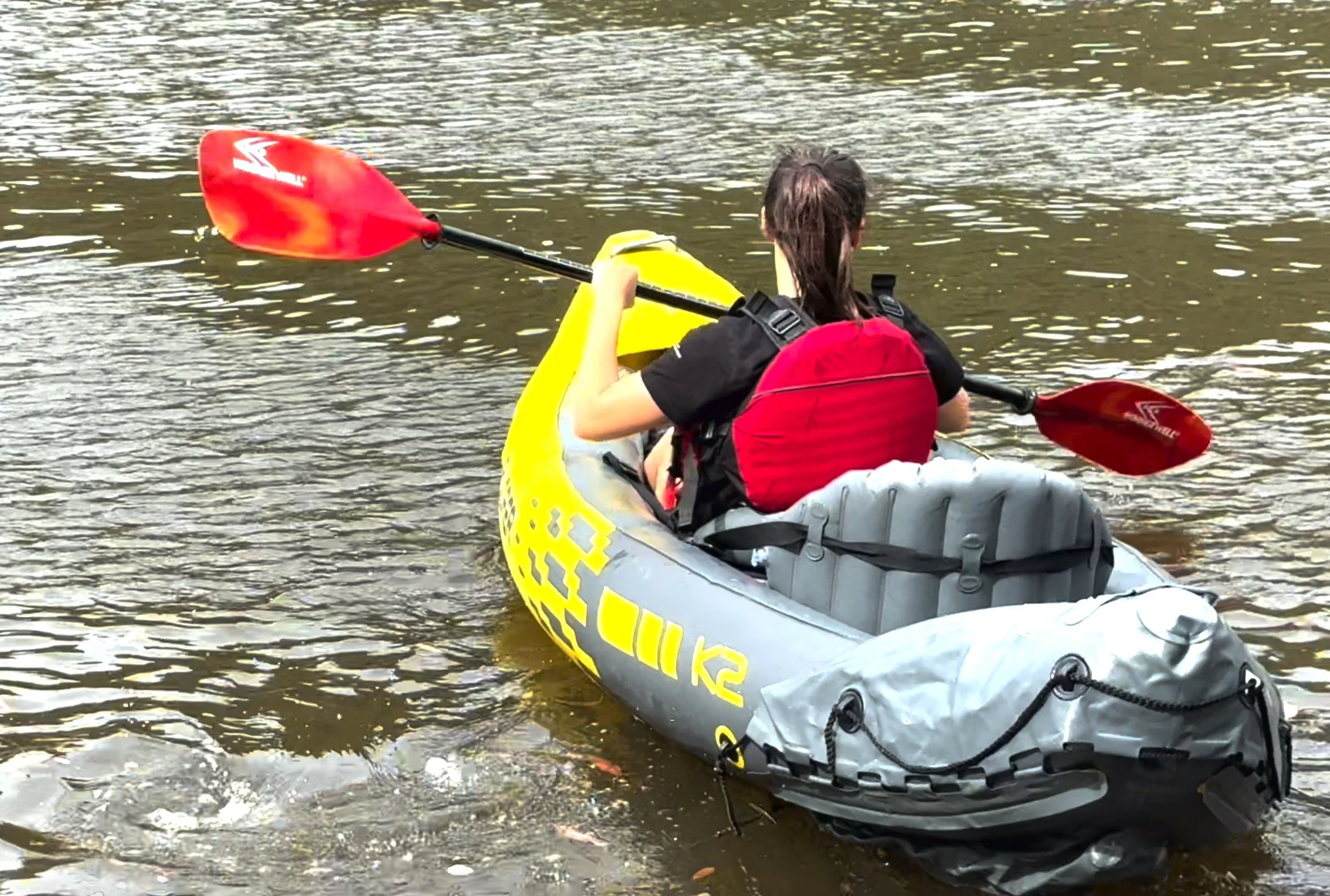
On the flip side, lower‑end models like the Intex Explorer K2 and Challenger K2 struggle with tracking and feel slower and less efficient, especially when fully loaded, because of their flat bottoms and softer construction. Overall, the higher‑performing kayaks in this group tend to combine stiffer floors, longer waterlines, and thoughtful hull shapes that let them go faster, track straighter, and handle mild chop more confidently than the basic inflatables.

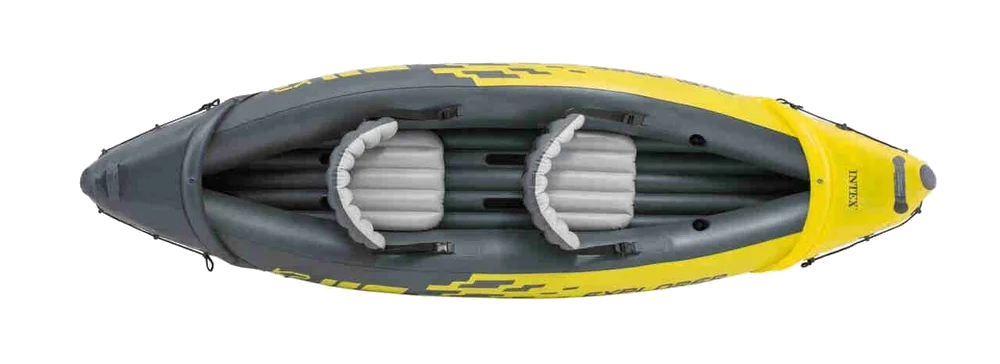
The Intex Explorer K2 is cramped for two people and can be difficult to keep in a straight line
How Different Inflatable Kayak Types
Feel On The Water
 Recreational
|
 Touring
|
 Fishing
|
 Whitewater
|
 Folding
|
|
| Typical Use | Enjoyment, family use, leisurely exploration | Longer distances, day- or multi-day expeditions | Fishing, leisurely paddles | Lower grade to more technical whitewater | Recreational or touring (lower weight capacity than touring inflatable) |
| Stability |
★★★★★
Stable
|
★★★★★
Can be less stable
|
★★★★★
Very stable
|
★★★★★
Stable
|
★★★★★
Can be less stable
|
| Speed |
★★★★★
Slower; faster with drop-stitch
|
★★★★★
Faster
|
★★★★★
Slower
|
★★★★★
Slower
|
★★★★★
Can be very fast (longer hull)
|
| Maneuverability |
★★★★★
Easy to steer
|
★★★★★
Less nimble
|
★★★★★
Easy to steer
|
★★★★★
Highly maneuverable
|
★★★★★
Depends on hull shape
|
| Portability |
★★★★★
Very portable
|
★★★★★
Portable but often heavier
|
★★★★★
Portable but often heavier
|
★★★★★
Very portable
|
★★★★★
Very portable
|
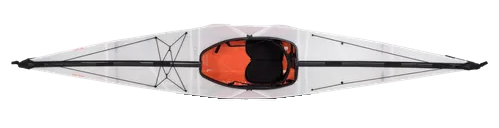
| Who It's For | First-time or casual paddlers; families & pet owners; shorter, relaxed distances; those who value stability | Experienced paddlers covering longer distances; fitness paddlers; multi-day expeditions | Those who mainly want to fish from their kayak | Beginner to expert whitewater kayakers | Those who prefer not to use or purchase a pump |
For a deep dive into the different types of inflatable kayaks available, head to our article on Everything You Need to Know About Inflatable Kayaks.
Construction
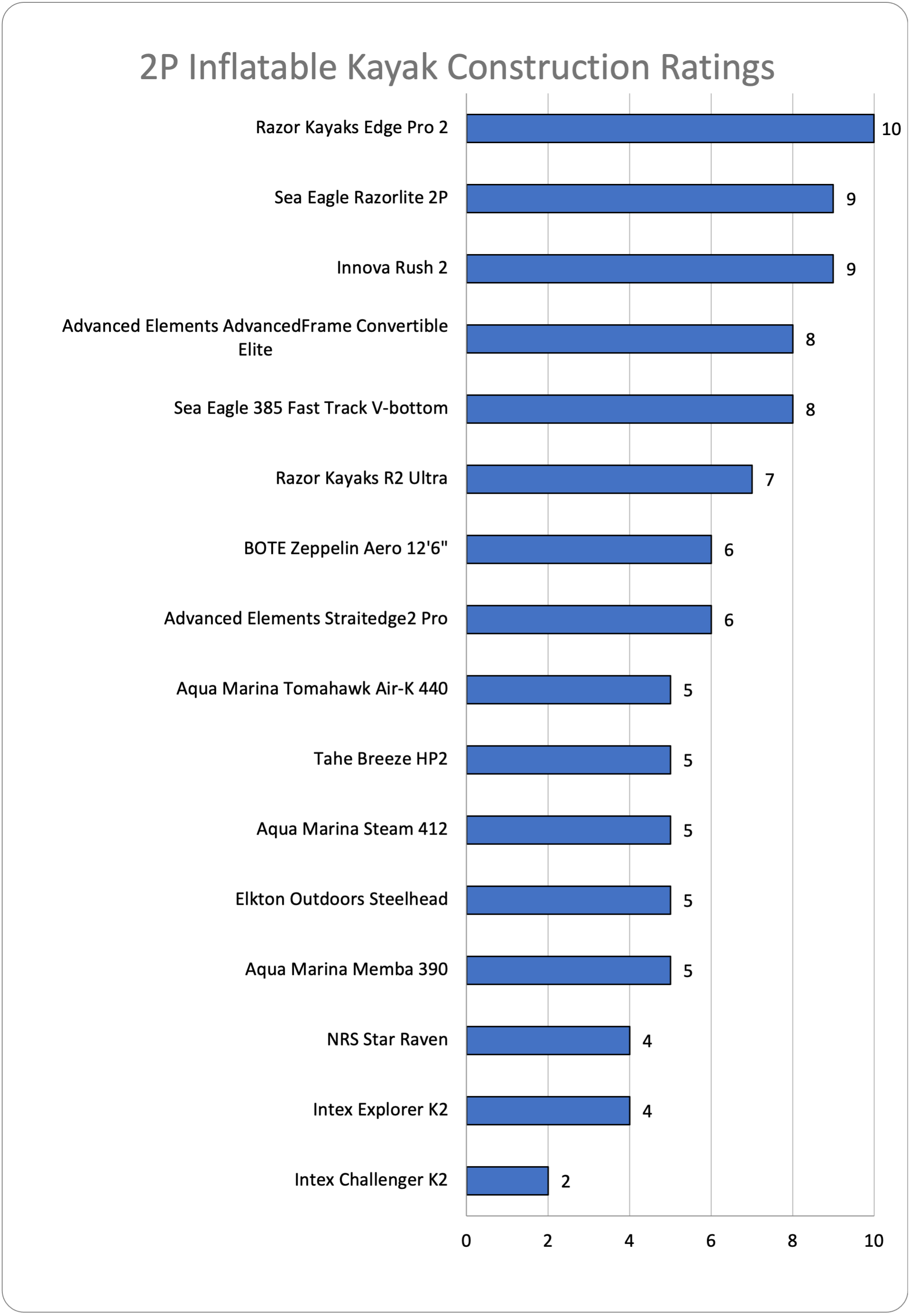
Construction has four main elements: durability, design, quality of materials and craftsmanship.
A lot of these inflatables are built to feel surprisingly close to a hard-shell, thanks mostly to drop-stitch construction and tough outer fabrics. The Razor Kayaks Edge Pro 2, for example, uses a thinner 5cm drop-stitch core wrapped in Tech-Stitch material, which keeps it rigid but also lighter and roomier inside for two people, and its seams and valves held pressure for days in testing.
Boats like the Sea Eagle 473rl and Aqua Marina Tomahawk go even further with full drop-stitch bodies and reinforced PVC or 1100 Decitex fabric, so you can pump them up to higher pressure and get that solid, hard-shell-like feel with molded or hard bow and stern pieces for extra protection. Others, such as the Aqua Marina Steam 412 and Memba 390, mix a high-pressure drop-stitch floor (around 4.35 PSI) with softer side tubes or polyester shells, giving you a stiff, stable base but a bit more flex in the sides for comfort and easier packing.
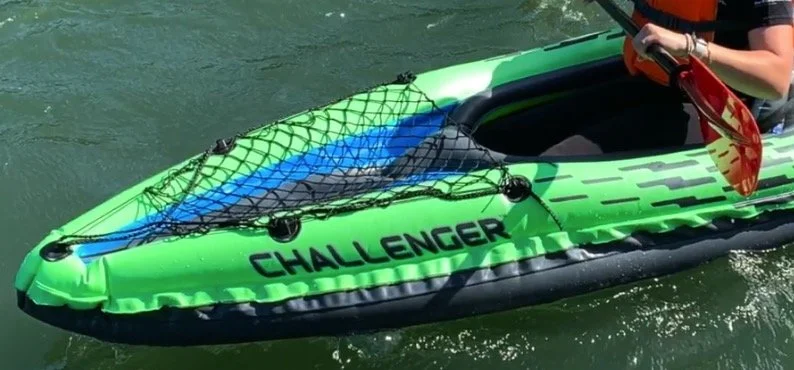
At the budget end, kayaks like the Intex Explorer and Challenger K2 use thinner vinyl or pool-toy-style materials with simple beam or L-beam floors, which keeps costs down but means they’re more prone to punctures and feel less robust than the heavier PVC and tarpaulin builds on the more premium boats. If interested, Aquaglide goes into detail about what Tech-Stitch is.
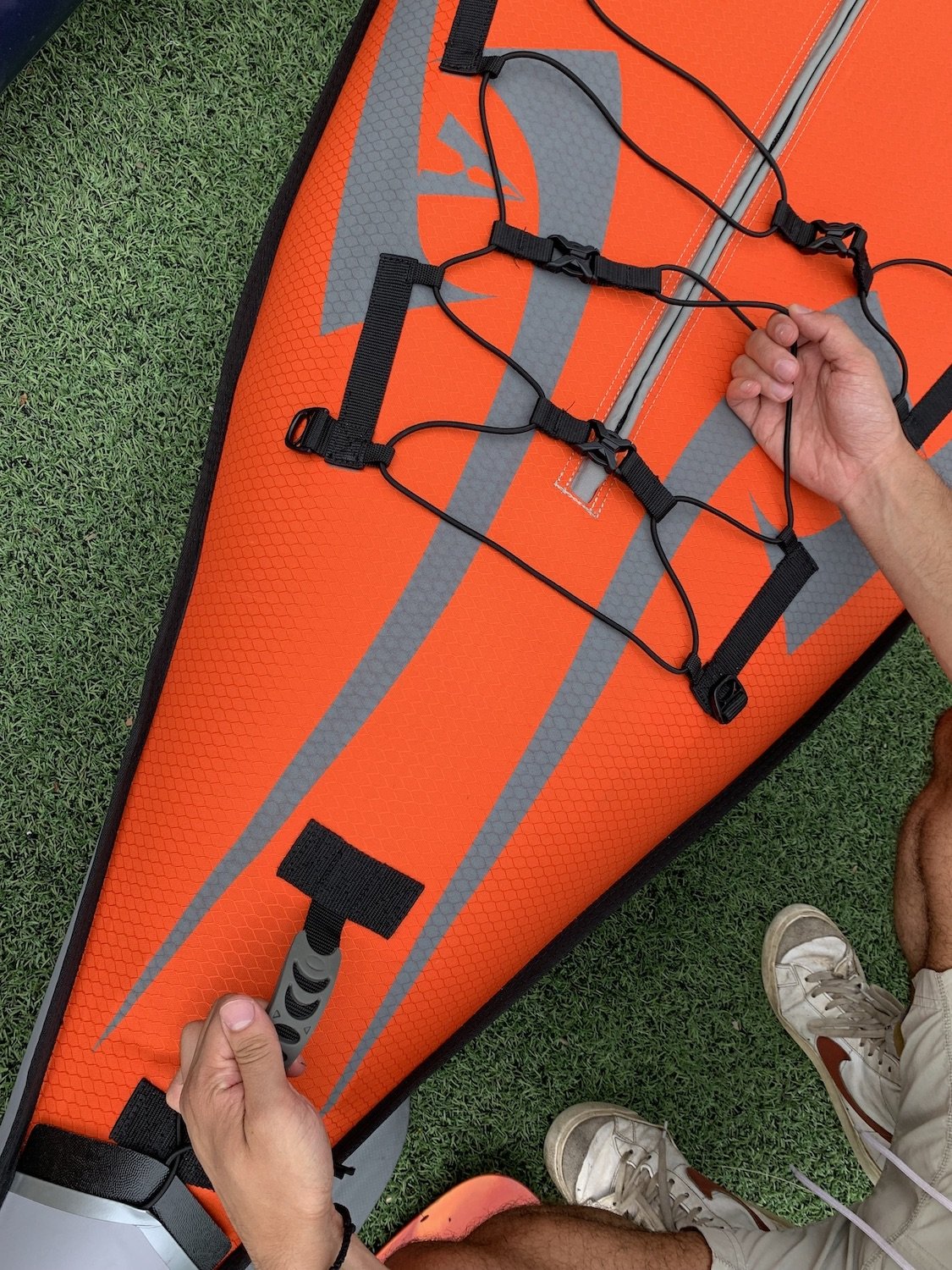
Advanced Elements AdvancedFrame’s solid materials and storage
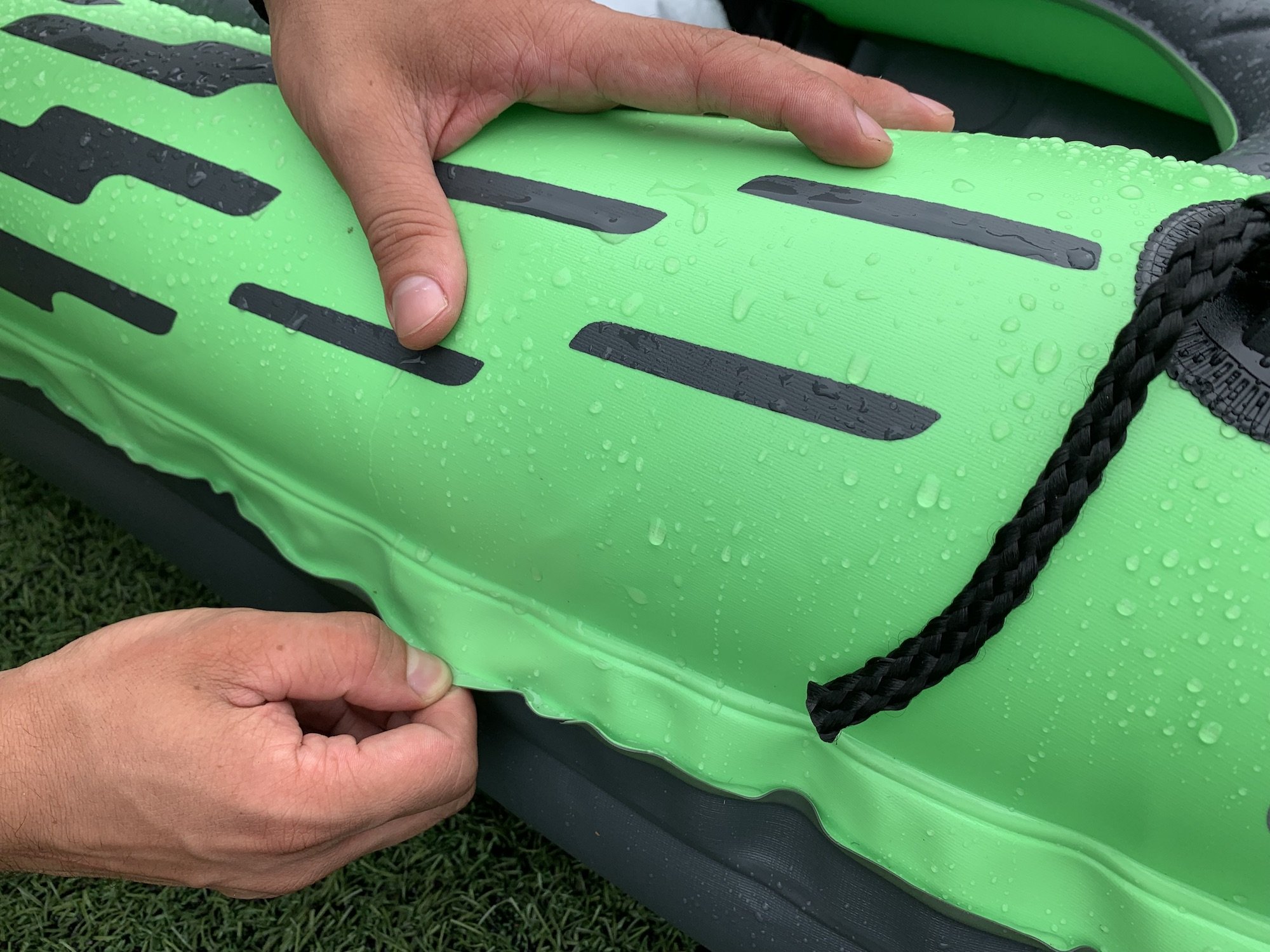
Intex Challenger K2’s flimsy vinyl with seams visible
Setup/Pack Down
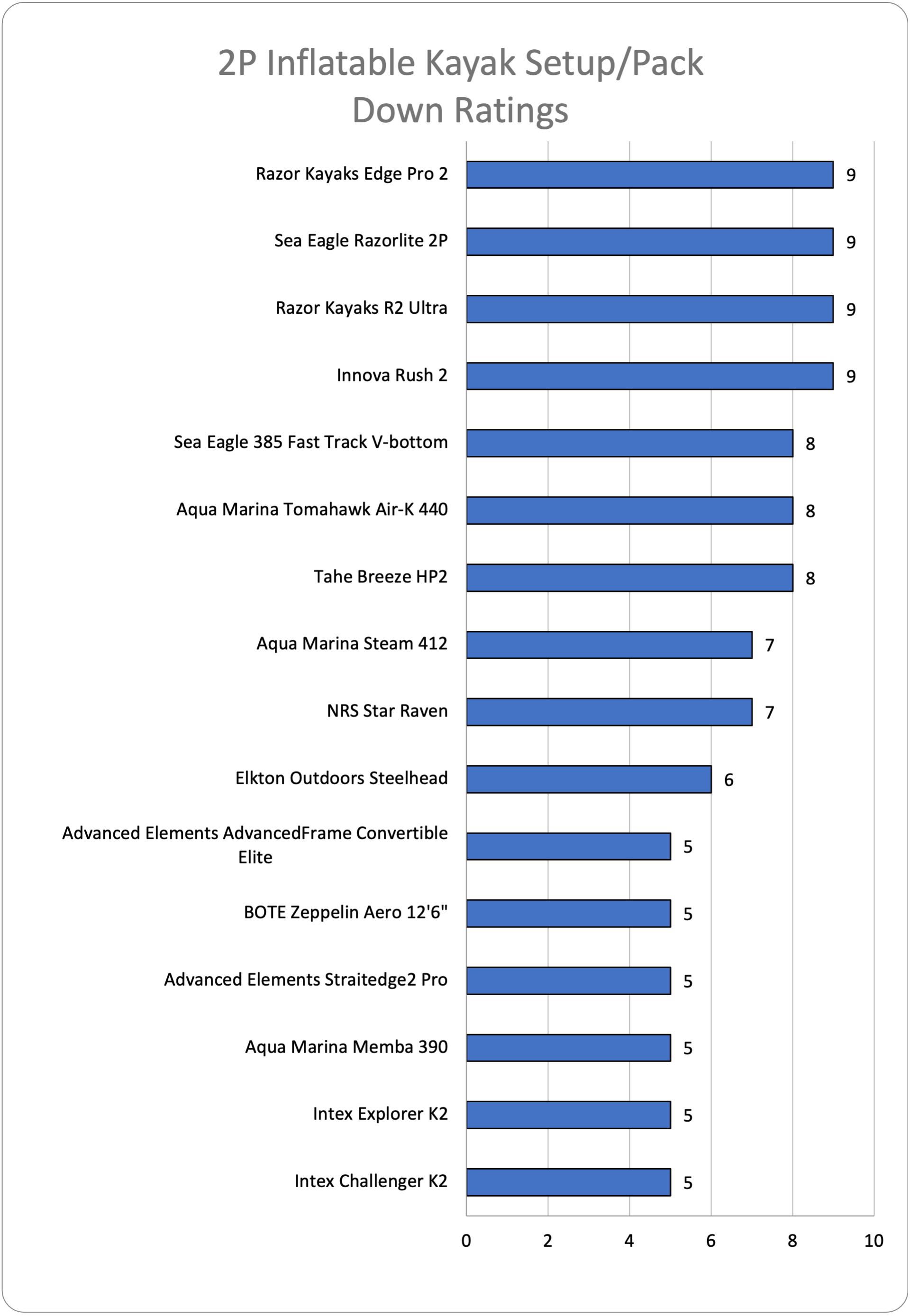
How quickly and easily can the kayak be set up and packed down?
Setting up and packing down these kayaks is mostly pretty straightforward, especially once you get the hang of it, though some shine more than others. Top-notch ones like the Razor Kayaks Edge Pro 2 and R2 Ultra inflate super quick (under five minutes with a good pump) thanks to identical valves all close together, quick-clip seats and footrests, and slick PVC that dries fast before rolling into a roomy bag. Models such as the Aqua Marina Steam 412 and Memba 390 make it even easier with their removable drop-stitch floors that you slide in first (just mind the arrows for the bow), letting you wipe everything bone-dry in no time, while the Sea Eagle 385ft Fast Track takes about seven minutes to pump up but can be a bit fiddly to fold neatly at first.
Budget options like the Intex Explorer K2 drag it out with awkward valves and a tiny pump that's hard to reach under the inflating sides, though the Challenger K2 zips along in under eight minutes with its simple three-point system and pressure gauge (just don't expect luxury).
Overall, grabbing an electric pump saves your arms across the board, and practice makes packing a breeze.

It’s essential that your inflatable kayak is completely dry before you store it to avoid mold growth. Aquaglide’s Navarro kayaks are covered in an outer skin of polyester - nice to look at, but a pain to dry.
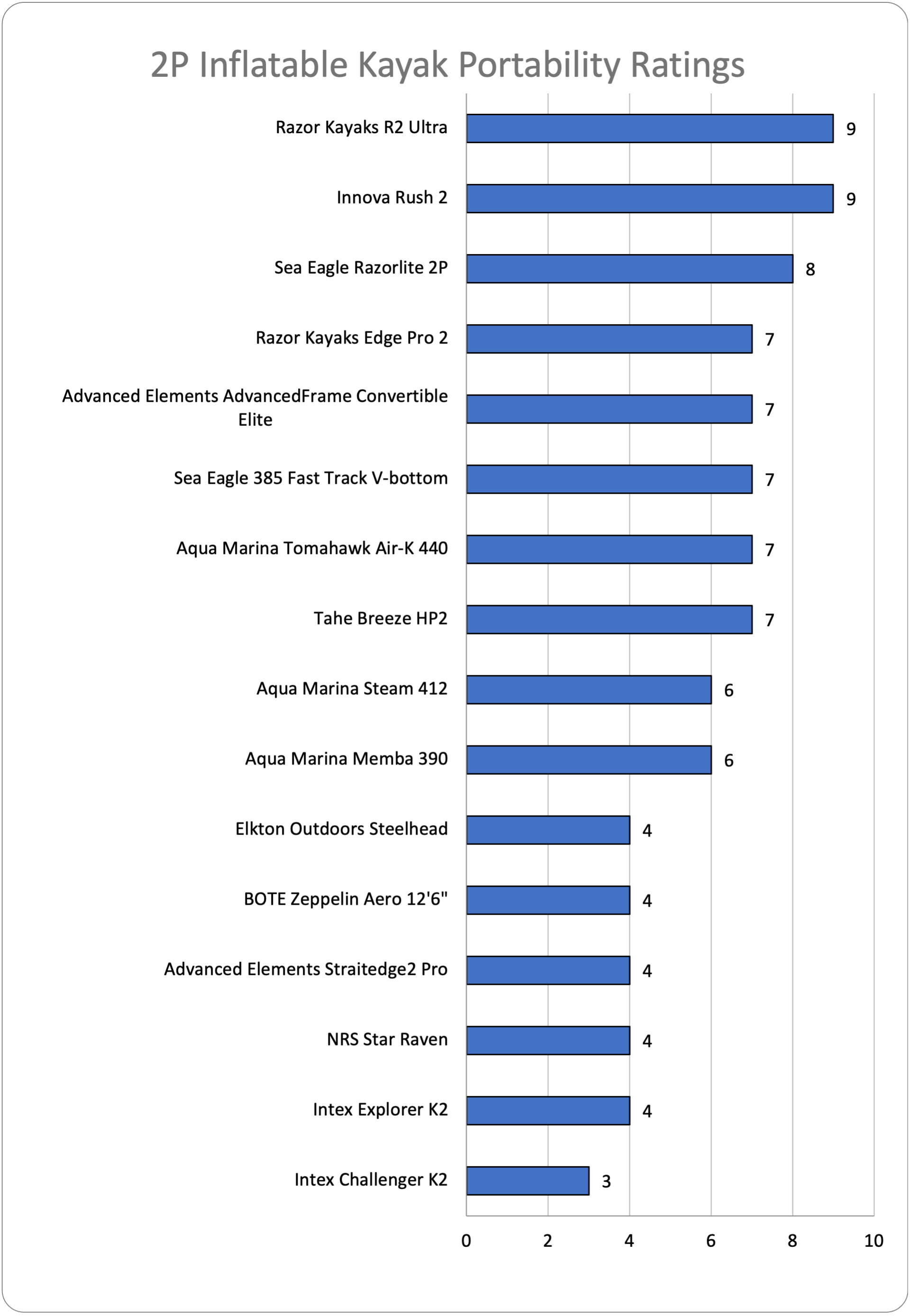
Portability
Portability focuses on weight, size and ease of carrying the kayak.
Less expensive kayaks may appear lighter and more compact, but they achieve this by using thin materials that can compromise quality. In instances where this compromise exists, we've indicated it in our reviews. Remember, being smaller and lighter doesn't always equate to being better in terms of quality. Most of these kayaks pack down small enough to toss in your car trunk without needing a roof rack, which is a huge win over rigid ones, but their weight and bag design make a big difference for carrying.
Lighter standouts like the Innova/Gumotex Rush 2 at just 34lbs slip into a comfy 100L backpack with wide shoulder straps, perfect for short hikes to the water, while the Aqua Marina Steam 412 and Memba 390 around 33-36lbs come with padded backpacks that fit paddles and gear too, making solo carries doable for average folks. Heavier beasts such as the Elton Outdoors Steelhead 150 and NRS Star Raven II at 44lbs are a two-person lug or best for drive-right-up spots, though their bags still shrink them for easy storage in closets or RVs. Even the pricier BOTE Zeppelin and Advanced Elements Straitedge2 Pro at 40-42lbs get wheeled or handle-equipped bags for rolling or team-carrying, and the super-cheap Intex Explorer K2 stays light and simple despite its flimsy bag.
Bottom line, if you're hiking far, go light and backpack-style; otherwise, they're all road-trip friendly.

We struggled to get the AdvancedElements Convertible Elite back in its bag - while a smaller bag is great in terms of having a smaller package to carry, for some kayaks we found the pack size was a little too ambitious
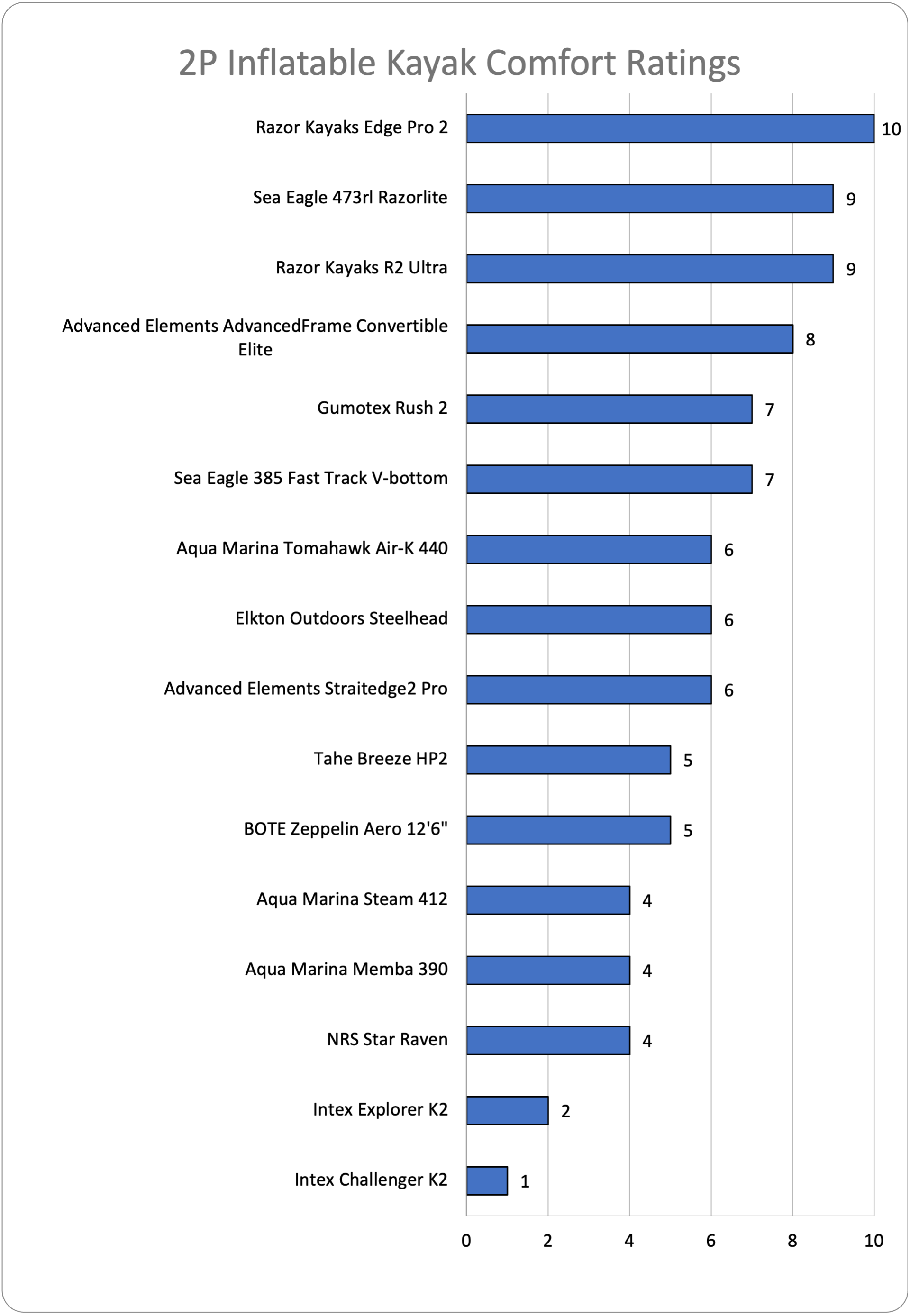
Comfort
Comfort comes in a variety of forms: cockpit space, seat materials, backrest design, legroom and paddle use.
These kayaks vary a ton in comfort depending on your size and trip length, but the good ones prioritize supportive seats and room to stretch out.
The Razor Kayaks Edge Pro 2 wows with its thicker foam seats, huge legroom for tall folks, and easy-adjust setups that let two paddlers customize without bumping elbows, plus an optional spray skirt keeps you dry in chop. Sea Eagle Razorlite 473rl and 385ft Fast Track deliver with tall-back seats offering solid lumbar and tons of legroom for cross-legged chilling or bracing via adjustable footrests or daisy chains, though cushions might thin out after hours. Advanced Elements Straitedge2 Pro and AdvancedFrame Convertible Elite add versatile reconfigurable seating with inflatable lumbar, spacious cockpits for gear or dogs, and good ergonomics for tall paddlers. The BOTE Zeppelin Aero 12'6" nails it with elevated, cushy inflatable seats that stay dry and comfy for hours, complete with pockets for snacks, while the Tahe Breeze HP2 offers decent adjustable backrests and space for average folks on day trips, though its flimsy footrests might wear out fast.
Budget picks like the Intex Explorer K2 and Challenger K2 feel soft and adaptive with adjustable backrests but get squishy or wet quick, especially for bigger paddlers who can't recline well. Overall, look for padded, repositionable seats and good ergonomics if you're planning longer hauls.

Some kayaks, like the Itiwit 1-2P, have inflatable seats. This may suit some people who like the extra height - we preferred sturdy foam seats that were less wobbly, and also, one less thing to inflate or deflate!
Our Awards

Inflatable Kayaks
Razor Kayaks
Edge Pro 2
Inflatable Kayaks
Intex
Challenger K2

Inflatable Kayaks
Sea Eagle
473rl Razorlite

Inflatable Kayaks
Elkton Outdoors
Steelhead

Inflatable Kayaks
Razor Kayaks
R2 Ultra
Inflatable Kayaks
Intex
Explorer K2
2-Person Inflatable Kayak FAQs
Can you use a 2-person inflatable kayak alone?
Lots of people do. Just know that the kayak may feel more affected by wind and won’t handle as sharply as a true solo kayak.
How do you balance a tandem kayak when paddling solo?
It’s best to sit as close to the middle as you can so your weight is evenly spread out. If the seat can’t be moved, many paddlers put gear, a dry bag, or a water jug in the empty seat to help balance the boat.
Is steering more difficult when solo in a tandem kayak?
It can be, because you don’t have another person helping with direction. Using techniques like a J-stroke or adding a rudder or skeg can make it track straighter.
Can you adjust the seating in a 2-person inflatable kayak?
Many tandems have removable or adjustable seats, so you can shift one toward the center or take a seat out completely. This makes solo paddling much easier.
Are tandem inflatables less stable than solo ones?
Not really. Tandem inflatables are often wider, which helps stability. They just feel bigger and catch more wind, so when paddled solo they can feel slower or ‘barge-like.’
What are the pros and cons of a 2-person inflatable kayak?
They’re great for sharing the workload, paddling with a beginner, or enjoying the water together. The downsides are that they’re heavier to carry, require coordination between paddlers and are harder to maneuver than a solo kayak.
What if my kid or a lighter person is paddling with me?
Adjust the seats so the weight is balanced and make sure everyone, especially kids, wears a properly fitted life jacket (PFD). Most tandems allow flexible seating setups to help with balance.
Will a tandem inflatable last long?
A good-quality inflatable can last for years if you take care of it. Make sure you inflate it correctly, avoid over-pressurizing, keep it out of harsh sun when possible and store it dry. Very cheap ‘toy-style’ inflatables won’t last nearly as long.
Do tandem inflatable kayaks take longer to inflate?
They can have more air chambers, but the inflation time is usually pretty similar to a solo kayak. The pump you use makes the biggest difference.
Is a tandem inflatable kayak a good first kayak?
It can be, especially if you know you’ll often paddle with someone else, but if you plan to go out alone most of the time, a tandem may feel heavier, slower, and harder to handle than a true solo kayak.
Which 2-Person Inflatable Kayak Should Most People Buy?
The best all-round 2-person inflatable kayak for most people is the Razor Kayaks Edge Pro 2. It offers the closest feel to a hard-shell tandem kayak, with excellent tracking, strong speed, high stability, and a level of comfort that makes it suitable for regular use and longer distances, rather than just occasional paddles together.
If you want a high-performance touring option, the Sea Eagle 473rl Razorlite is the standout choice. It's built for speed and efficiency over longer distances, with a rigid drop-stitch body and a roomy cockpit that works well for two experienced paddlers.
If you're trying to balance quality, usability, and price, the Razor Kayaks R2 Ultra is the best value choice. It's lightweight, quick to inflate, easy to handle, and still delivers a genuinely great paddling experience for two without moving into premium pricing territory.
For beginners on a budget, the Intex Explorer K2 is a safe starting point. It's affordable, stable, and simple to set up (and better than the Intex Challenger K2), and decent for calm recreational use while you both find your feet on the water.
In short:
Best overall: Razor Kayaks Edge Pro 2
Best for touring: Sea Eagle 473rl Razorlite
Best value: Razor Kayaks R2 Ultra
Best beginner option: Intex Explorer K2
About Our Testing Process
At The Equipment Guide, we create reviews in the US to offer real, personal evaluations of the top products available. Our approach involves thorough research, including field tests, to make informed judgments and enhance your understanding of available options.
We meticulously review and rank all products, evaluating them based on relevant key features. We do not accept free products from manufacturers.
Our mission is simple: To create the US’ best outdoor gear reviews.
Afterword
We enjoy offering in-depth reviews of the best 2-person inflatable kayaks in 2025 in the US!
Whether you're seeking the best kayak reviews or specific model insights, we hope we’ve helped in some way. If you have feedback or want us to review a product, please don't hesitate to reach out. Your input is valued.
If our assistance led you to select and purchase an inflatable kayak, we'd be thrilled if you shared photos of your adventures with us, as we'd love to see you in action!